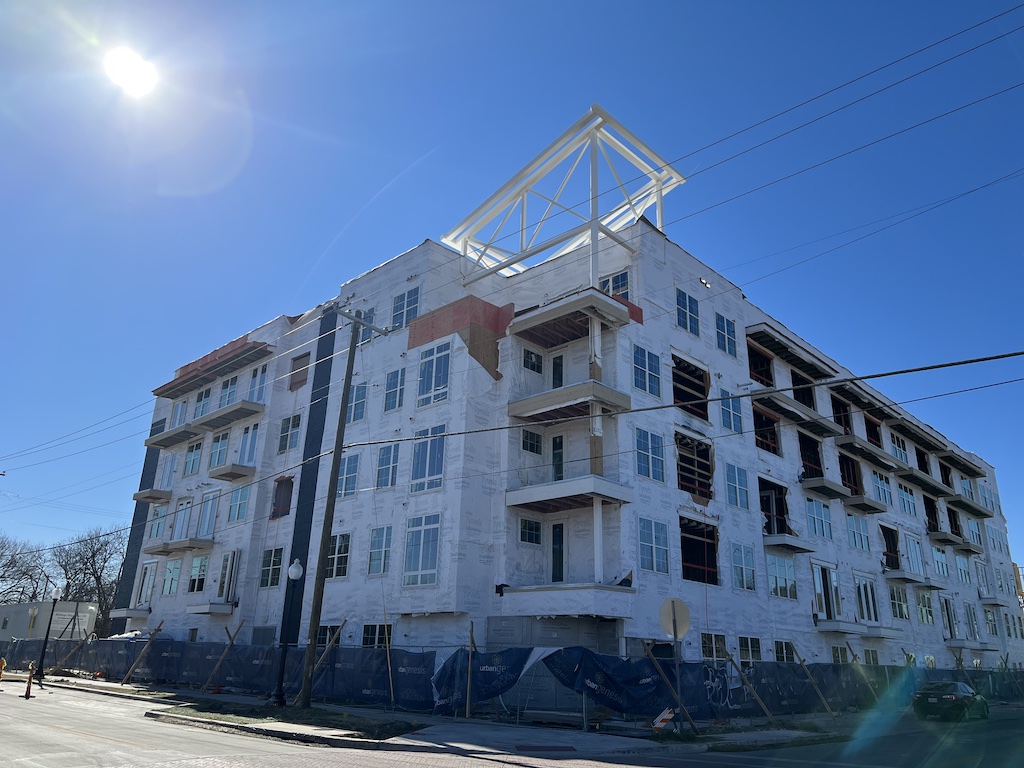
 As of Sept. 1, Senate Bill 840 went into effect for the state. SB 840 states that certain Texas cities, including Dallas, cannot prohibit the development of multifamily housing in zoning designations that permit commercial activities, such as retail and office, according to the City of Dallas.
There is a statewide housing shortfall of about 320,000 housing units to meet Texas’s growing population, according to an estimate released by the housing policy organization Up For Growth.
Dallas has projected a shortfall by 2030 of at least 80,000 units, District 1 council member Chad West said.
“We’re about a fourth of the state population of where we need housing units in some of the lower categories,” he said. “So people who make $50,000 to $60,000 a year, we’re already 50,000 units short of being able to house those people.”
If you don’t build enough market units, the people who can afford higher are going to go down to the next level, pushing those with a lower income down.
“”So (if) you don’t build enough of the top stock, everything falls down, and the people at the bottom get hurt the worst,” West said. “So we got to do more about housing in Texas. We got to do more about it in Dallas.”
The changes in zoning from SB 840 is one way in which the state can require more land options for more housing units. This also allows the state to have more control over city land. With only one month into the bill taking effect, there are still a lot of unknowns.
Nobody knew what to expect in the City and we still don’t, West said.
Although housing advocates love the expansion of benefits from the bill, there are also some challenges, such as no density caps, no limits to the Floor Area Ratio, and height restrictions, West said.
“Over 100,000 acres in Dallas is now impacted by this,” he said. “This is privately owned land that has now just been granted a lot more entitlements, probably worth a lot more money to all these landowners.”
This change in zoning allows the land to increase in value, but that could be a burden since it also means property taxes are increasing in value.
While SB 840 does close the gap on the amount of housing units needed, there may not be services or proper infrastructure for that housing. Potential housing has opened across the city, going to places where it was never expected before.
“It could be built in areas where there’s literally nothing and then it will be default lower income, because people with higher income won’t want to live there,” he said. “So it’s a risk that not just Dallas, but across the state, that SB 840 could run.”
Of the 117,971 acres effected, 26,652 acres have never been developed.
“I think a lot of the development that we’re going to see is going to be down here in the south because that’s where the vacant land is,” he said.