When Jon Schubert and his family found a home in Oak Cliff, he didn’t know it was a homecoming in a sense. Not until he mentioned the move to his grandmother Kathleen Kelley Schubert.
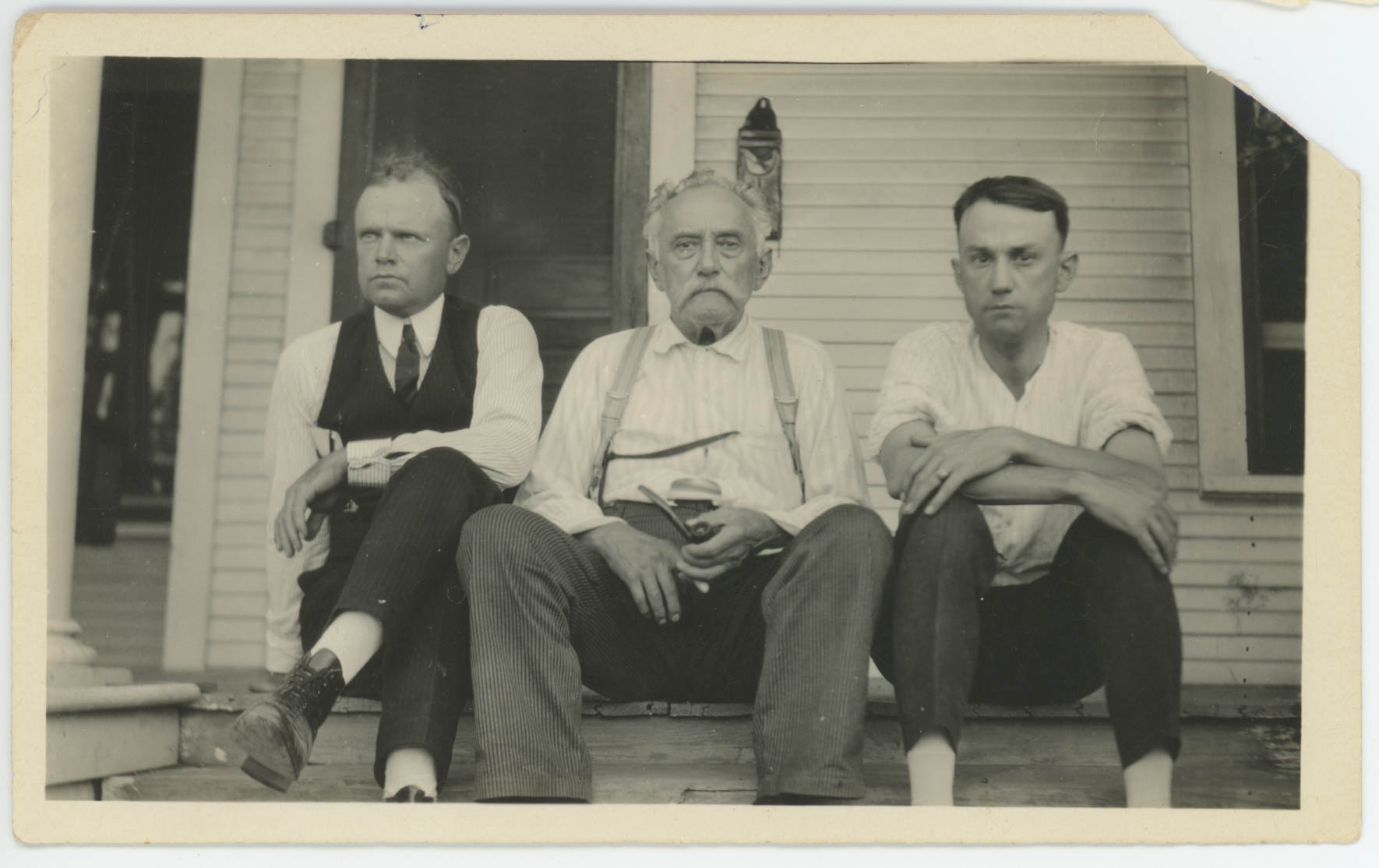
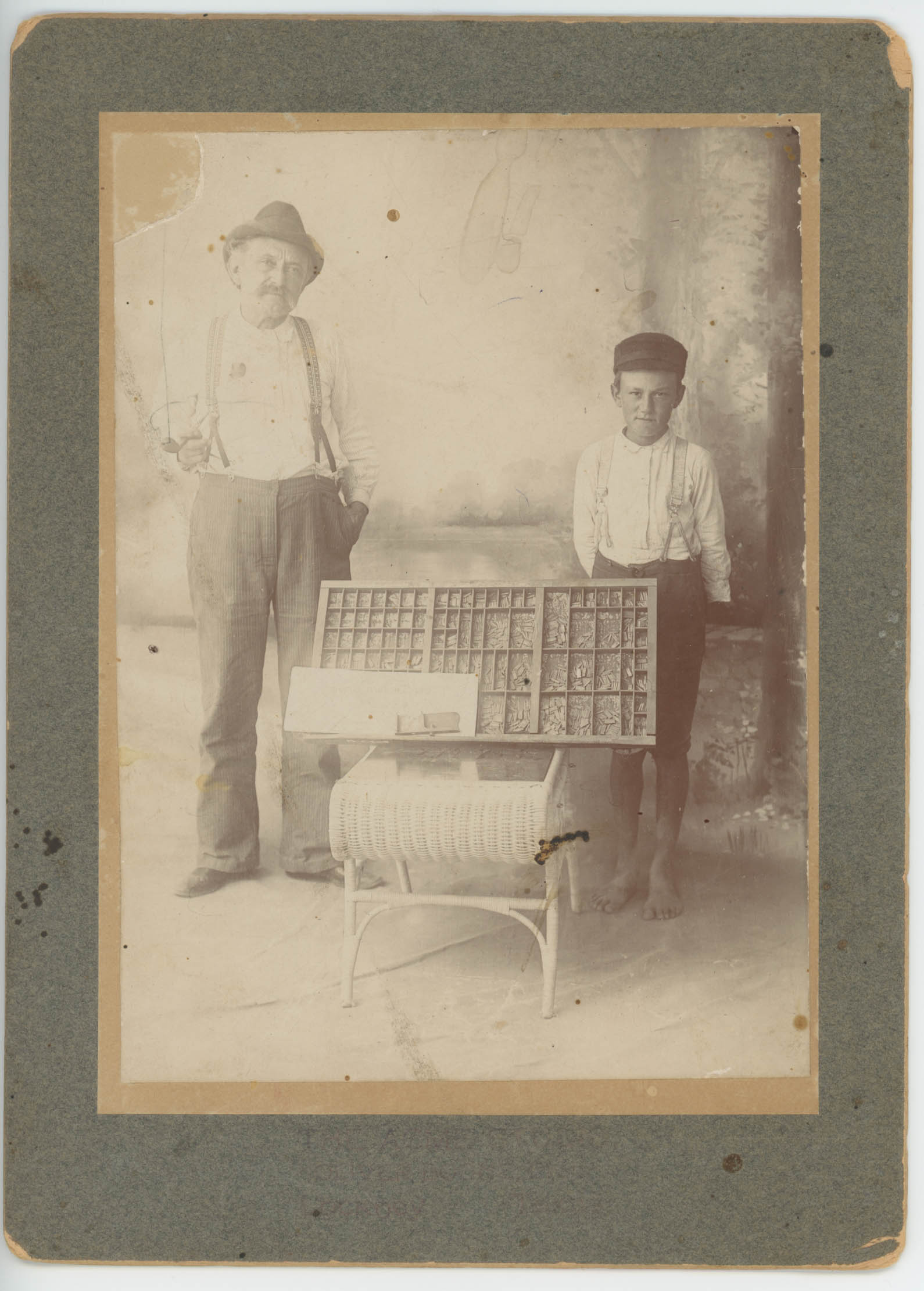
F.N. Oliver (middle) with sons Clifton and Coke, respectively.
“She was born in the ’30s. We told her, catching up at Christmas that same year, ‘Hey, we moved to Oak Cliff. We got a house in Winnetka Heights.’ Didn’t even know if she would know where that was because she grew up in West Texas in Spur, Texas,” he says. “And she just randomly said, ‘Oh, Oak Cliff. I know Oak Cliff. My grandfather was the mayor of Oak Cliff.’”
Her mother’s last name was Oliver.
Eighty-two names are listed on the plaque at Founder’s Park. Of the five listed mayors, the first one there is Frank N. Oliver, also known as F.N. Oliver.
When his grandmother came to visit his new home soon after, she brought Schubert the last remaining physical photos and tintypes of F.N. Oliver and two of his sons, Coke and Clifton (“Cliff” for short).
This sparked his journey into researching everything he could find about F.N. Oliver and how he came to lead and leave Oak Cliff.
Here’s what Schubert found.
Early Years
Francis “Frank” Neander Oliver was born in Florence, Alabama on Feb. 17, 1848, to parents Daniel and Jane (Ross) Oliver.
Daniel was originally from Devonshire, England, having moved to the United States at 8 years old. His wife Jane was “of Scotch parentage,” originating from Hickman County, Tennessee. The couple had 11 children.
Daniel graduated from Yale College and was chair of mathematics at the institution for several years, according to History of Dallas County. He also taught at the high school in Florence prior to the establishment of Wesleyan University.
Attending public schools in Florence, Oliver later learned the printing business at a young age.
“He was too young to fight in the Civil War, which I just want to say up front, I don’t know what kind of person he was. Could have been a total asshole, racist. I have no clue,” Schubert says.
“But there is some small evidence that he was in journalism, publishing. Always in a newspaper. He actually got out of Alabama because he and his family, from what I can tell, weren’t close, so he just wanted to come to Texas. At least that’s what my grandmother thinks.”
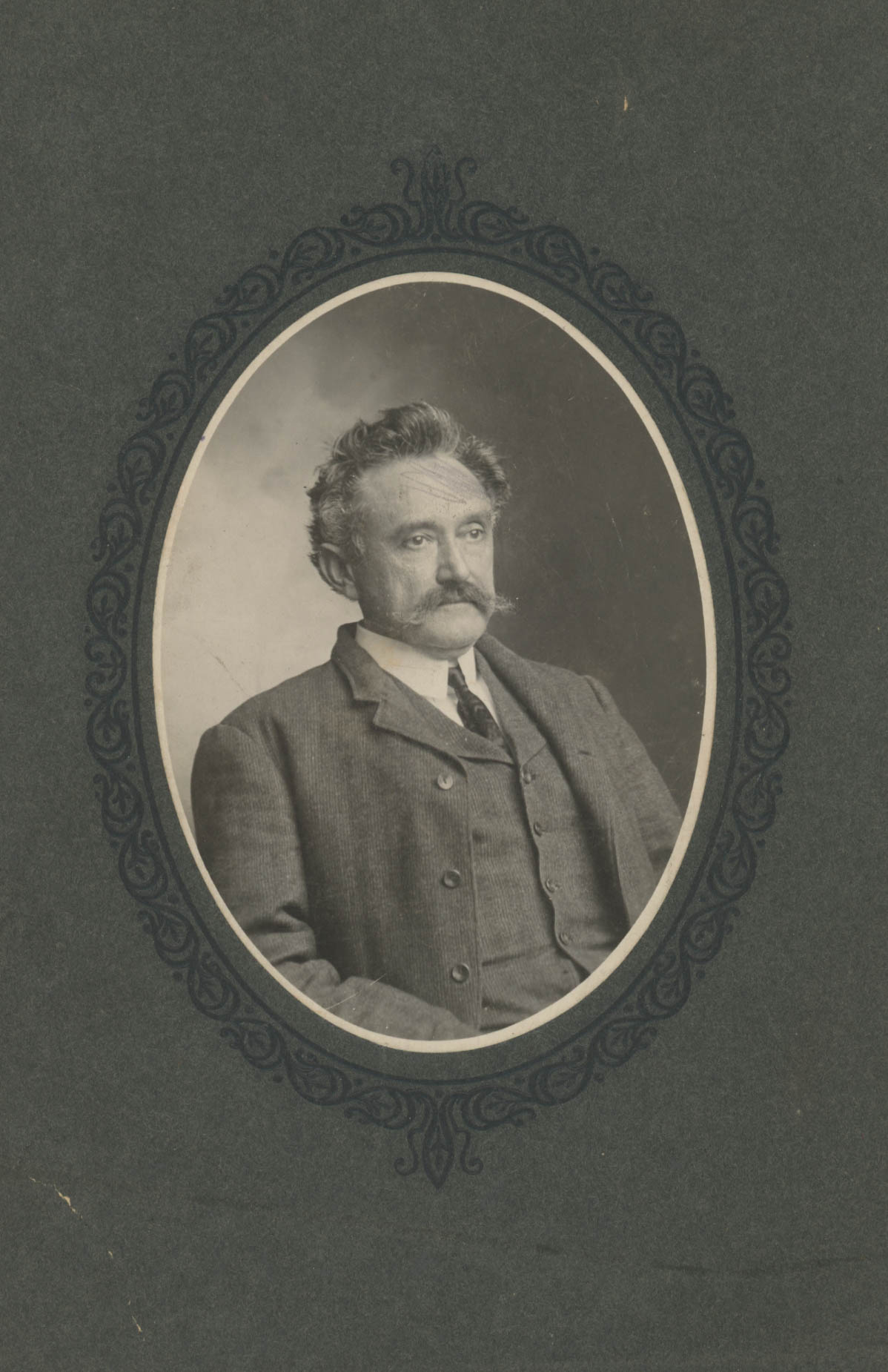
A tintype photo of F.N. Oliver given to Jon Schubert from his grandmother after learning his relation to the former Oak Cliff mayor. Photos courtesy of Jon Schubert.
His start in Texas
In 1874, Oliver issued the first daily paper in Denton called the Denton Review.
Nearly a decade later in 1881, he founded the Lewisville Headlight. During that time he was elected to the office of Justice of the Peace, which led him to run a paper and court at the same time for five years.
Eight years later, he resigned from his role at the Headlight and sold the publication, moving to Pilot Point, where he established another paper. After two years, he joined Thomas L. Marsalis on a move to Oak Cliff.
Settling in Oak Cliff
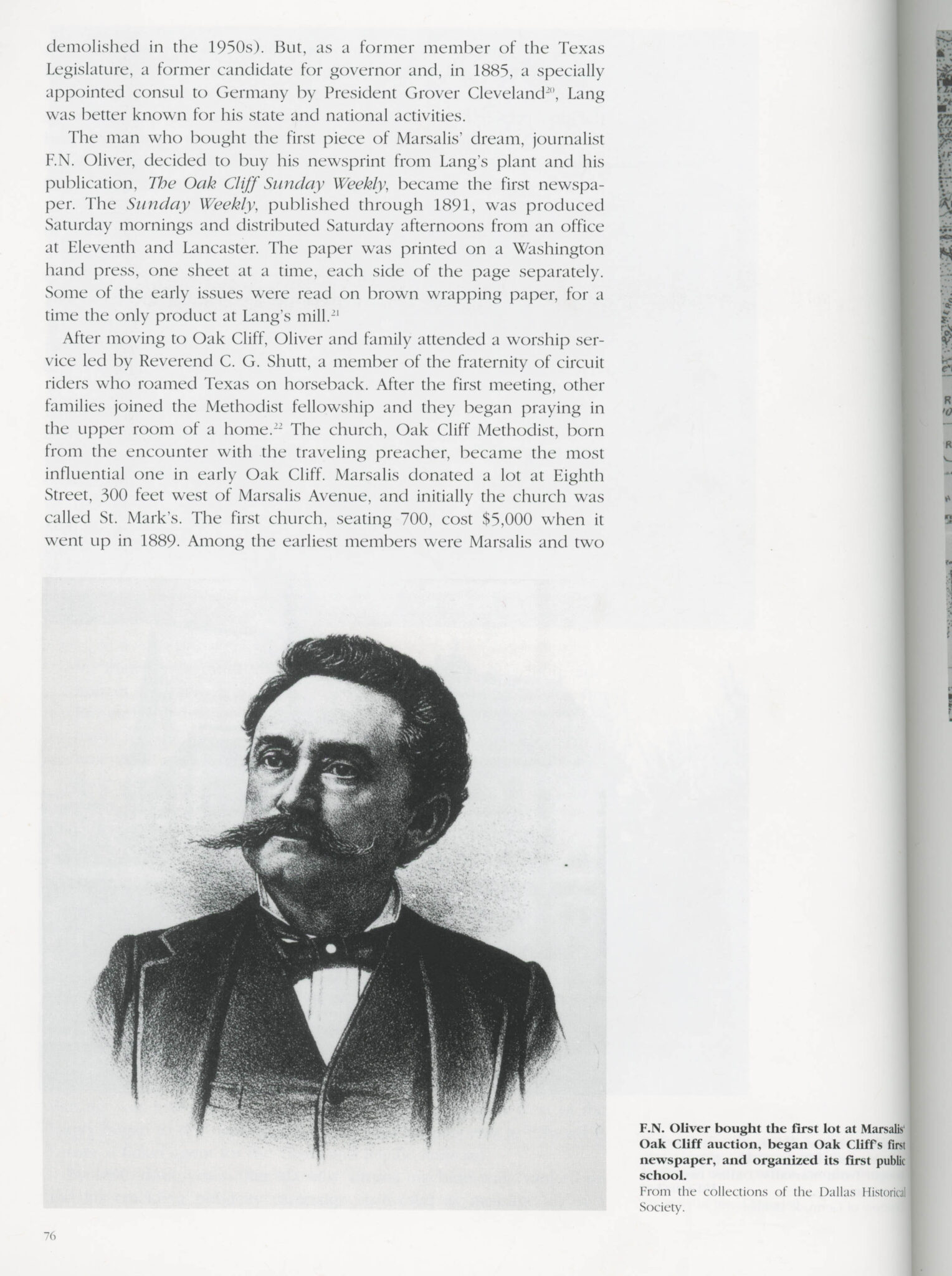
According to The Hidden City by Bill Minutaglio and Holly Williams, Oliver is known as “the man who bought the first piece of Marsalis’ dream.”
Schubert says that based on his research, Oliver’s house was on 10th and Lancaster.
“It doesn’t exist anymore, the neighborhood part, but that’s where his house would have been, and I think his business was just down the street from his house,” he says.
That business was yet another newspaper.
Oliver established the first one in our neighborhood, The Oak Cliff Sunday Weekly, which published through 1891. It was the first newspaper in Texas ever printed on paper manufactured in the state.
The mill, known as the Texas Paper Mill Company, was located within the new city. The paper was produced Saturday mornings and distributed Saturday afternoons from the office at 11th and Lancaster, according to The Hidden City.
He opened the paper with an issue of 10,000 copies and continued the publication for three and a half years until the city reached a population of 5,000, according to an article from the Lockney Beacon (another paper Oliver started in 1902).
“I really wish that I had access to the old articles that he, I don’t know if he always wrote them, but he at least edited them for The Oak Cliff Sunday Weekly,” Schubert says.
Along with the first newspaper, he also served as an Oak Cliff mayor. According to an article published in the Lockney Beacon, it was “one of the most hotly contested elections perhaps ever held in the city.”
As mayor, he spoke at the dedication ceremony of the Oak Cliff College for Young Ladies in 1892 and was among the first trustees of the Oak Cliff Public School System. Oliver was one of three appointed by Governor Lawrence Sullivan Ross to locate the State Orphan Asylum of Texas in 1887, which was considered “one of the crowning educational charities of Texas” located in Corsicana.
He was a charter member of the Texas National Press Association, where he served on many committees.
Outside of Oliver’s typical work in papers and politics, his family and the Shelton families began meeting with a circuit-riding preacher named C.G. Shutt. Together, they formed the Oak Cliff Methodist Church in 1887 (originally named St. Mark’s Methodist Church), according to Oak Cliff and the Missing Pieces.
OUT IN WEST TEXAS
Oliver and his family moved to Lockney, Texas in 1901. His wife was Mary E. Cogburn, whom he married in 1868, and together, they had eight children.
In 1902 Oliver started the Lockney Beacon. He ran the paper with Clifton until 1906. That year, he filed on a section of land in Dawson County at the Pride post office.
At some point, it seems Oliver struggled in business.
“I do know my grandmother said that she heard from her mother when they were out in West Texas, they didn’t have a lot of money,” Schubert says. “And they kind of were in an old shack, a dugout she called it.”
This was confirmed in an article from the Lockney Beacon, that Oliver and Clifton moved out to Pride, Texas, and “built a dug-out in which they lived until they could build a one-room on the front of the ‘kitchen’ or dug-out.”
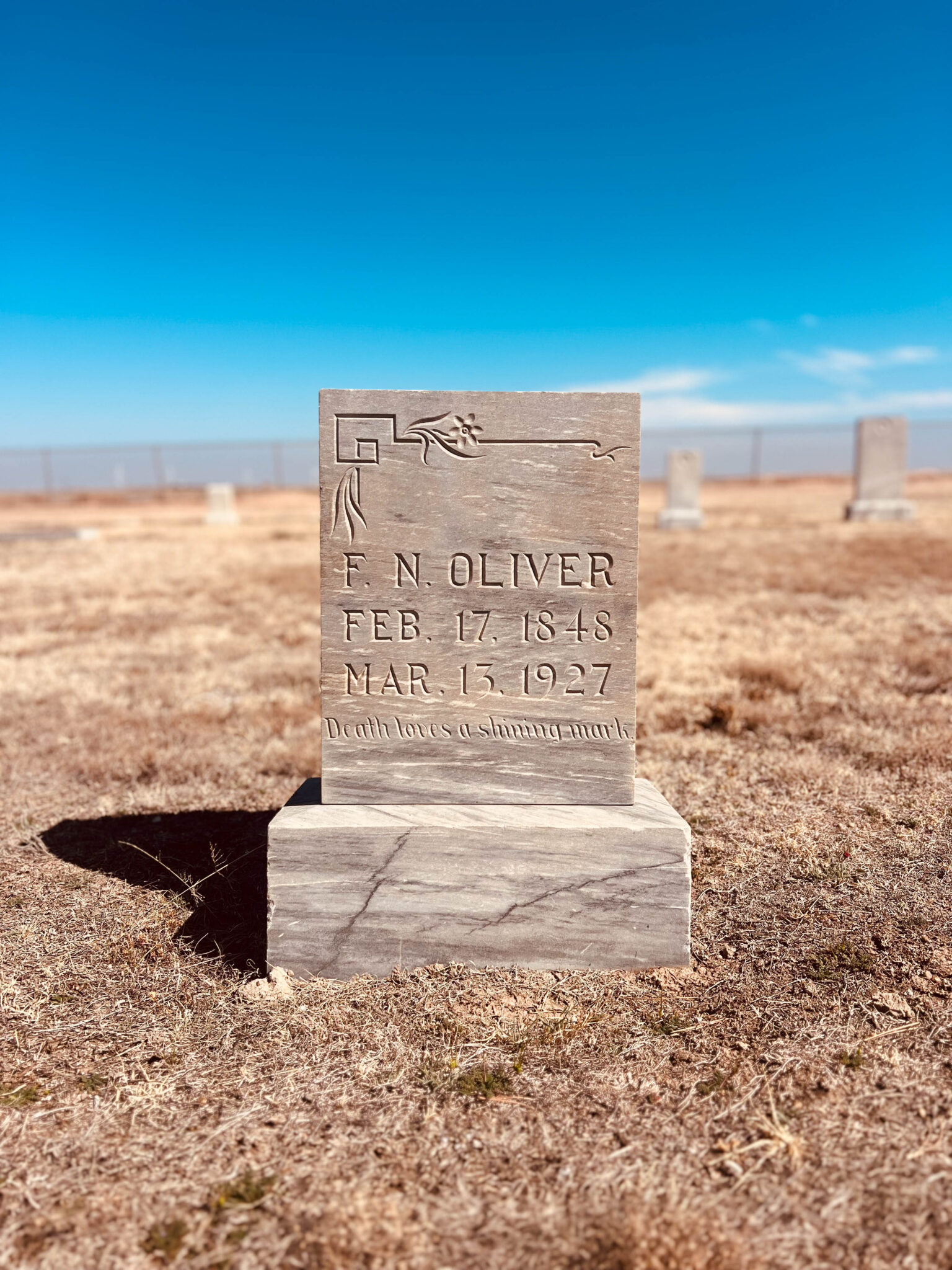
Two hours away from Pride, located in Lockney, Texas, Schubert and his wife found Oliver’s final resting place following his death in March 1927. Written on the stone is the phrase, “Death loves a shining mark.”