
Illustration by Lauren Allen
Stevens Park Village is in the process of becoming Oak Cliff’s newest conservation district.
A conservation district replaces the base zoning with zoning tailored specifically for the neighborhood and determined by the neighborhood to promote development or redevelopment that is compatible with its existing character.
There are currently eight conservation districts in Oak Cliff, with South Winnetka Heights, established earlier last year, being the most recent.
“The conservation district just provides a set of guidelines for the changes to the neighborhood that keep the historic character of the neighborhood intact, and these are determined by the neighborhood itself,” says David Preziosi, a member of the neighborhood committee. “They come up with the list of items that they would like to regulate as part of this conservation district process.”
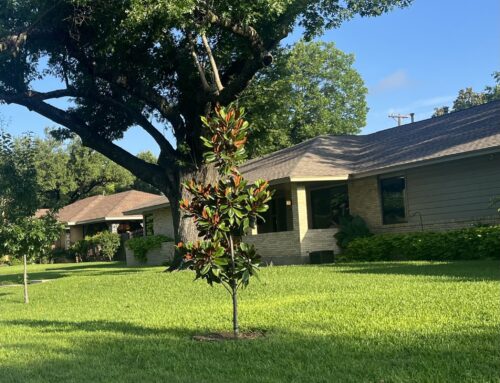
To be eligible for a conservation district, at least 75% of the neighborhood’s buildings must be at least 25 years old. Stevens Park Village residents have the desire to protect the unique qualities of the neighborhood such as the architectural styles and scale of the homes.
The process began with the neighborhood committee submitting a request for a determination of eligibility to make sure that the neighborhood qualifies for conservation district status, Preziosi says.
Community meetings were held to determine what development, architectural and optional standards they would like to include in the conservation district. The standards that neighbors most wanted to include were building height, permitted uses (stories), setbacks and architectural styles.
When less than half of participants opted for the optional standards like paint, landscaping, garages and steps, they were omitted from the petition.
Neighborhood committee leader Donovan Westover said they received their petitions last July and began collecting signatures. The city requires 58% of the neighborhood or 82 signatures, though the committee had higher goals.
“We said, ‘OK, we’re going to require 75% to move forward, because otherwise we just don’t feel like we’ve got enough people on board, and that’s leaving too many neighbors out,’” Westover says.
Gathering the signatures ended up being a quick process, largely due to the strategy put in place by the committee. In the end, 106 out of 141 households signed the petition, just above 75%.
In March, the city accepted the signed petitions and will now hold a series of public meetings to determine the details of the regulations based on neighborhood input. After an ordinance is drafted and finalized, the city council will decide on final approval at a public hearing.
During the public hearing process, the city council will have a series of meetings where they go through each one of the criteria, as outlined in the conservation district ordinance, requiring the neighborhood to address whether they would like to regulate it.
“Massing, setback, heights, porches, garage location, that sort of thing,” Preziosi says. “If we say we want to regulate heights, we have to decide, is it one story or two story or one and a half story? That all gets determined in these public meetings.”
Illustration by Lauren Allen
After those meetings are concluded, the city’s planning and development department will put together a draft conservation district ordinance for the neighborhood. The neighborhood will review it, and then it will go to the City Plan Commission for review. The CPC will hold public hearings, then city council will make the final determination on whether or not the conservation district ordinance should be passed.
For Preziosi, Westover, the rest of the committee and the neighbors who support the conservation district, the main goal is to keep the neighborhood as it is now.
“I think the impetus was really just to protect the historic character of the neighborhood,” Preziosi says. “There’s a lot of development pressure in Oak Cliff, so we wanted to make sure that whatever potential new development took place in the neighborhood or changes to the existing structures kept the character of the neighborhood intact and don’t diminish the neighborhood.”