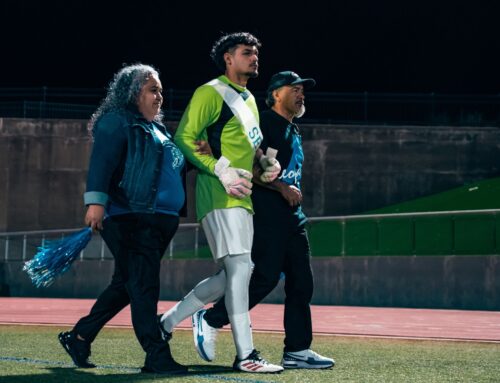

Program participants playing at the Kiest Tennis Center. Photo by Victoria Hernandez.
The City of Dallas is considering a change in management rights of the Kiest Tennis Center, which could affect the accessibility of tennis programming for the community.
The Dallas Tennis and Education Academy (DTEA) currently offers free and affordable tennis programming at the center. The organization goes beyond providing access to tennis, but also has an educational component. There’s volunteer opportunities for the players to give back and tutoring on site, plus enrichment programs like Girls on the Move and Boys on the Move, where the players participate in a mentorship program.
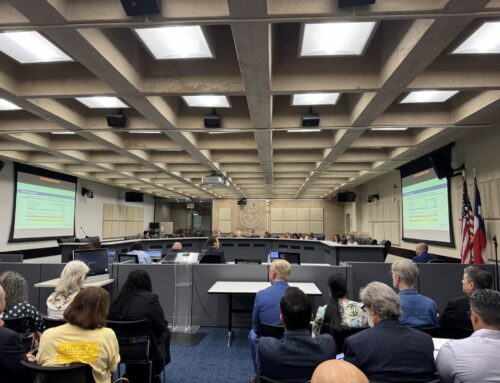
Now, the programs of DTEA at the Kiest Tennis Center could change. City leaders are exploring a new contract for center management with Impact Activities, an organization that manages multiple public tennis and pickleball centers across Texas and California. The proposal recently was approved for recommendation from the Dallas Park and Recreation Board for four facilities across Dallas.
District 4 City council member Maxie Johnson, who represents the community surrounding the Kiest Tennis Center, said that he supports those who have expressed concerns about this potential change.
“I am supporting the community and the community does not want this,” Johnson said.
An online petition to keep the current management has garnered over 1,000 signatures in support.
Craig Cole is head pro of DTEA and director of tennis for the Kiest Tennis Center.
Through his time at the center, he has worked not only as a coach but the beautification efforts of the facility. He pointed to mold on the left side of the building, describing it was once double what you see today.
“I powerwashed the building. The building had dilapidated wood on it, falling off … came in and kind of just made the place look aesthetically pleasing so people would want to come back,” he said. “And then made sure to keep the rates conducive to this area.”
He added that this is important because most of the participants at the Kiest Tennis Center would not be able to afford tennis at the typical cost.
“We need courts, we need a facility, a home to continue this,” he said. “And it would kind of be detrimental not just to us, but to the community.”
Cole and program participants share the worry that without their management, that access will be disrupted.
“For someone to go after this facility is kind of kicking us out,” he said. “If you’re running a for-profit business … why would you want a free junior program here when you’re trying to create a junior program or have another one next to it?”
Bianca and Gabriel Beltran are parents to two players in the program, 18-year-old Cruz Beltran and 13-year-old Inez Beltran.
Gabriel Beltran said that right now, there is uncertainty whether a change in management would keep the same vision of accessibility.
“We know what the people that come here and are involved in this organization would like to happen, but we just don’t know what they’re planning.”
Bianca Beltran said that their son will be graduating from the program this year and had hoped to come back as a coach.
“I’m not sure what that would mean for him as far as where he would go, but for my daughter, I don’t know. I know that I couldn’t afford the private lessons or the tennis lessons,” Bianca Beltran said. “I mean, she comes out here Monday through Thursday for two hours a day. There’s no way that I could afford to take her to a country club.”
The change is something that would affect many of the kids in the program, not only for tennis, but for the community built surrounding DTEA.
“This program to me, it’s like a family to me,” Inez Beltran said, “because I live so close to here and every time coming to tennis, it just makes me happy seeing my teammates.”
Like the Beltrans, Vance Dick, 17, said he deeply values the program and how it has helped his overall well-being beyond just playing a sport.
“I just worry that it’ll change. The next generations and those after won’t be able to have the resources with the same family that has done it through all these years and done it super well,” Dick said. “Even if the next people do a good job, which we have no way of knowing, I feel way more comfortable having to stay in the same hands that have molded so many great people today.”