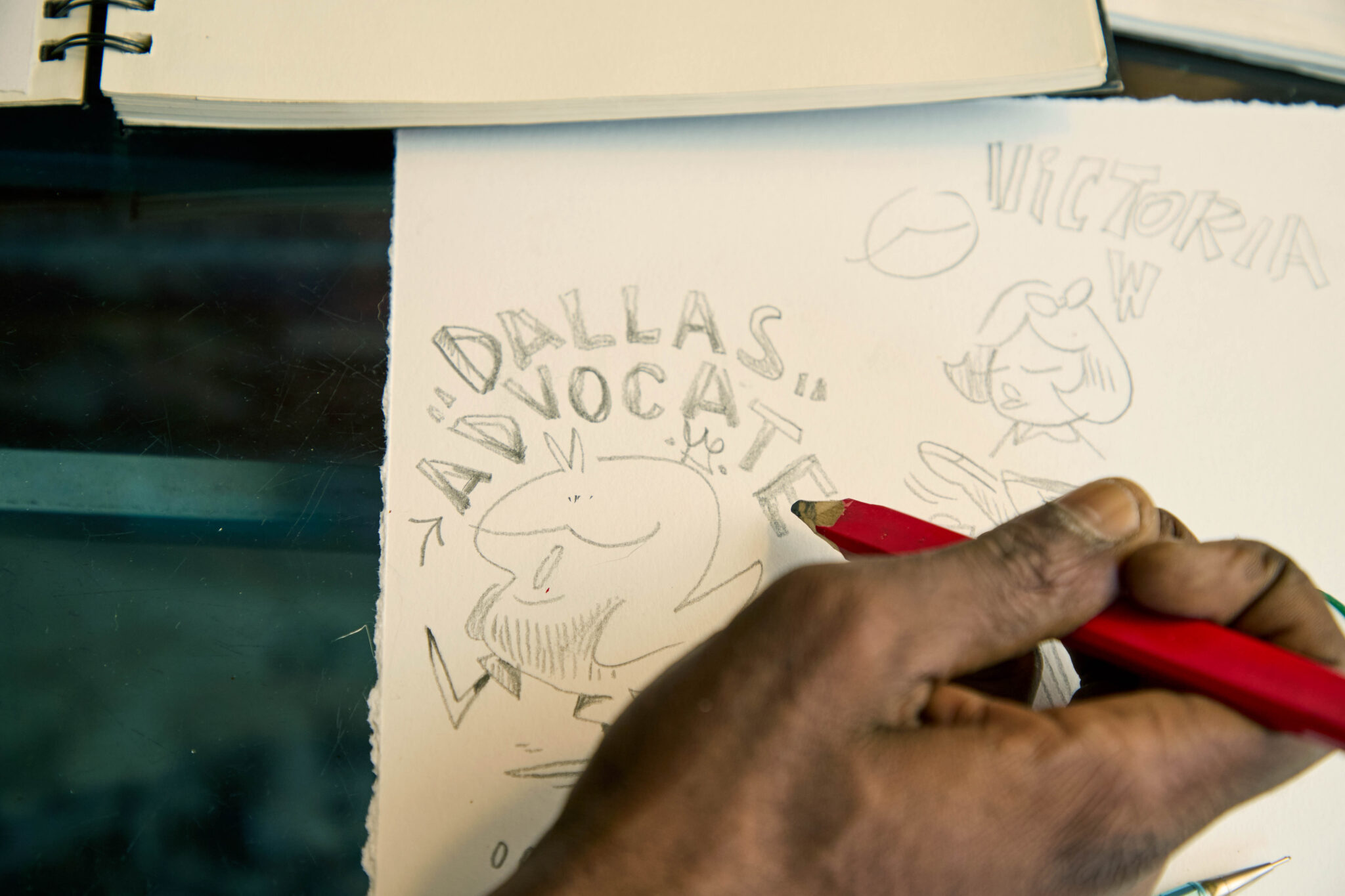
Dyemond Obryan Daniel is Dallas-born and raised. As a kid, he began picking up art from his mother. She was an avid painter of landscapes, flowers and funny faces. Daniel would often redraw her work.
Photography by Victoria Gomez
With everything from hand-drawn sketches to paintings, he explored artistic styles, taking inspiration from skateboarding art he saw on the streets to caricature sketches from his people watching.
His hobby picked up in his early 20s when he had a spark for graphic design and illustration, utilizing Adobe Illustrator and Photoshop in addition to hand-drawn work. Day to day, Daniel would do everything he could by learning and meeting people he says perfected their craft, feeding off their energy to fuel his own creative passions.
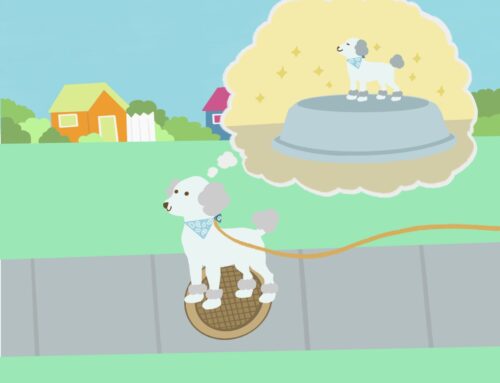
From there, he says something possessed him to pursue art as a career, taking inspiration from the Dallas skateboarding art he saw growing up. In 2021, he was featured in Thrasher Magazine and created a limited edition poster for the Mavericks. Or you may know his style from the dog of Herby’s Burgers or the design he made for the Oak Cliff Skate Park.
Working as a professional artist was something natural for him to pursue. Until it wasn’t. Today, he’s working full time as a mechanic.
His last exhibition at New American Perspective featured art with aspects of religion. His next exhibition is coming up in 2026, in collaboration with Raymond Butler and friends at the Oak Cliff Cultural Center.
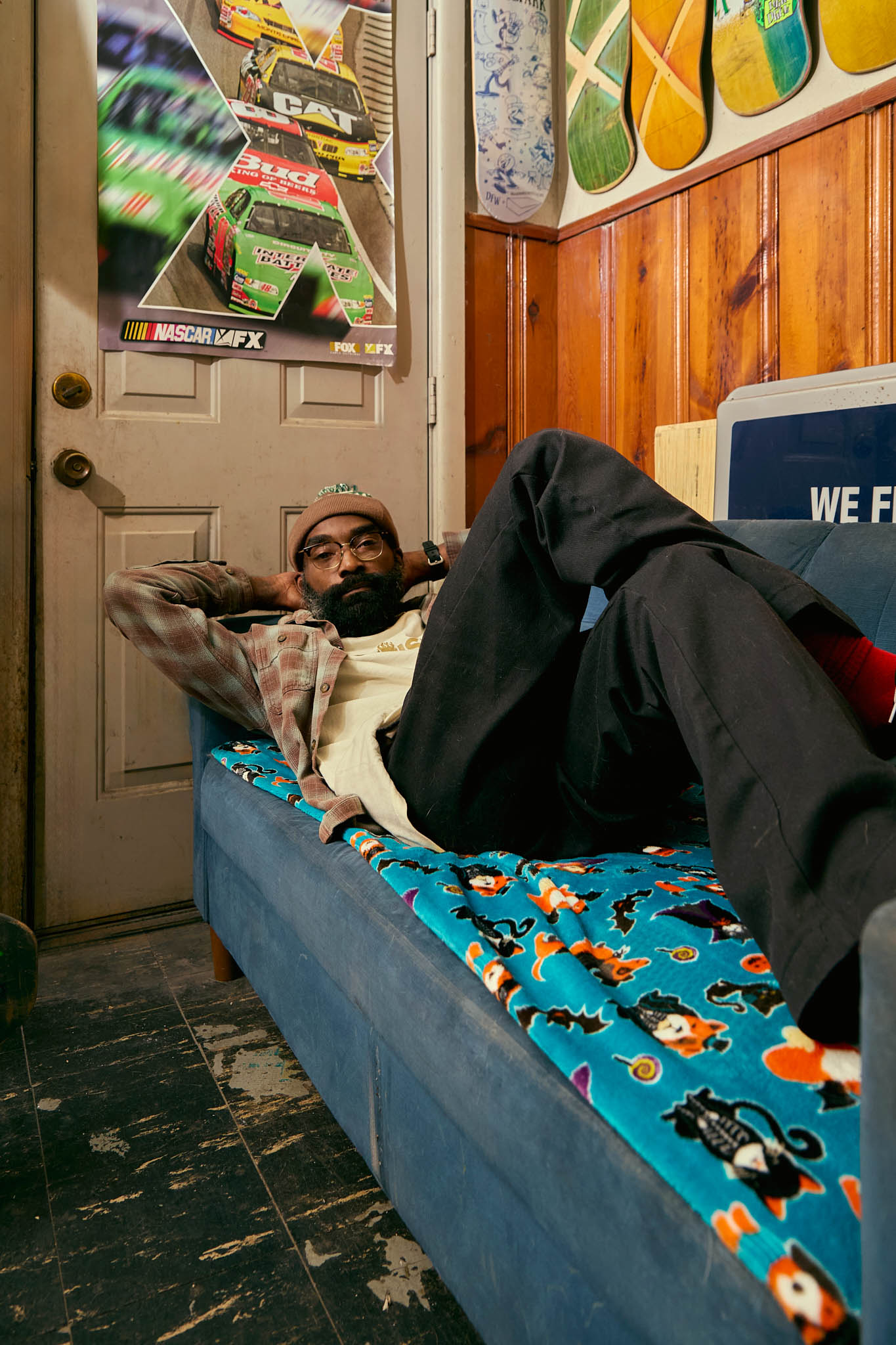
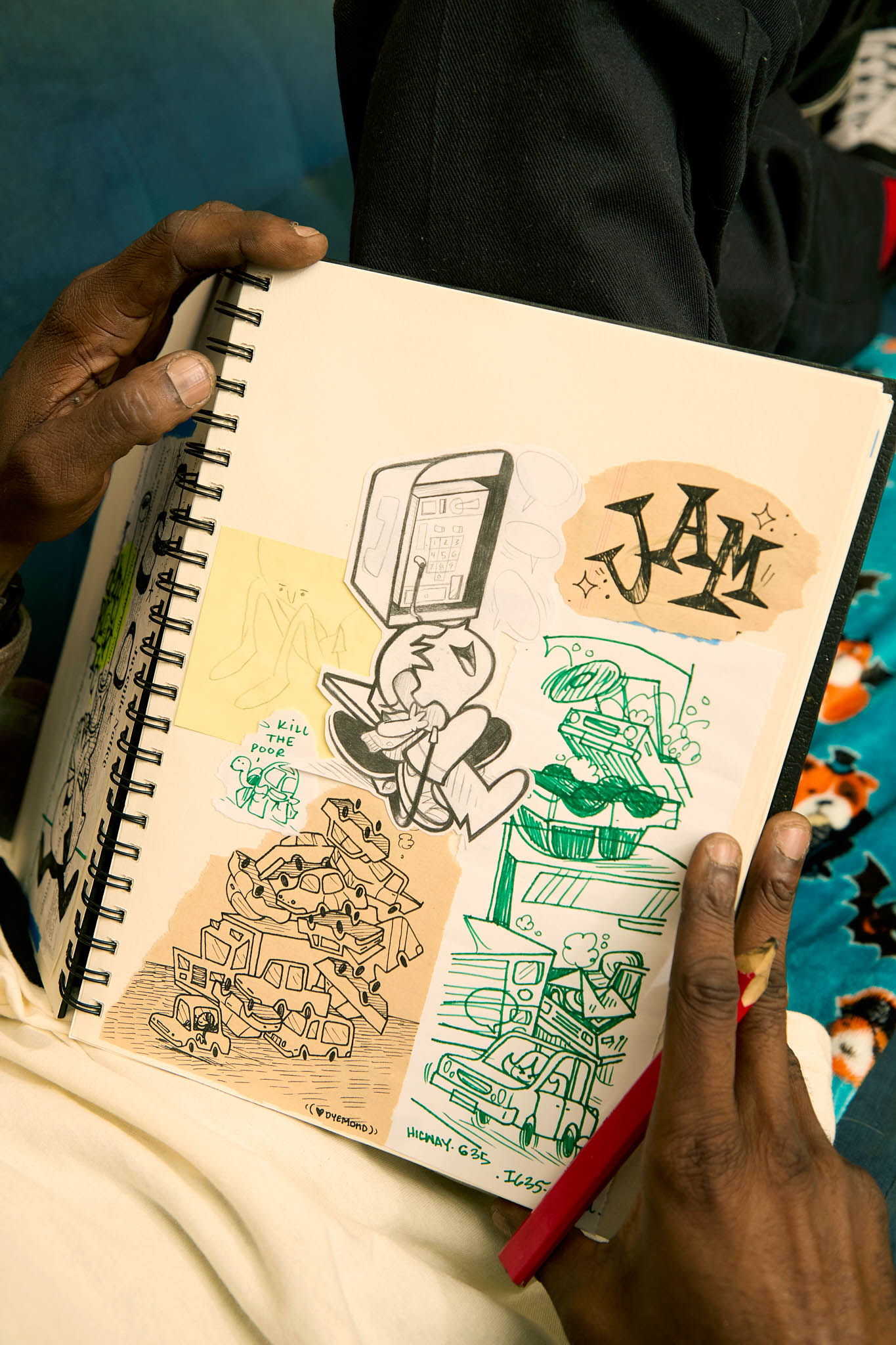
Without attending art school, how did you get into “the art world?”
I’ve been drawing and painting since I was a kid, and one of my really close friends, Edward Montees, who lives in New York now, started posting drawings, and I was doing just that. He’d see me drawing on a piece of paper or something, and he’d show people. And then that turned into an art show invite around 2009. And then another one. And then it just steamrolled really quick and I was like, “I think I like doing this and I’d like to see what it’s like doing just this full time.” So I jumped into it with the blessing from my wife.
When did you stop working as an artist full time?
Around 2019 to 2020, kind of around the COVID shutdowns. Galleries were shutting down. Jobs that I’ve had were going away just because their businesses were closing. So things got a little stressful there for a minute, and it was already setting in for me that I wasn’t enjoying it as much. That just kind of pushed it forward to where I was like, “OK, well, what else do I like doing in life?” I like tinkering with things, so I ended up just working on cars. So now I just work on cars full time, and then in my off time, I make as much art as I can.
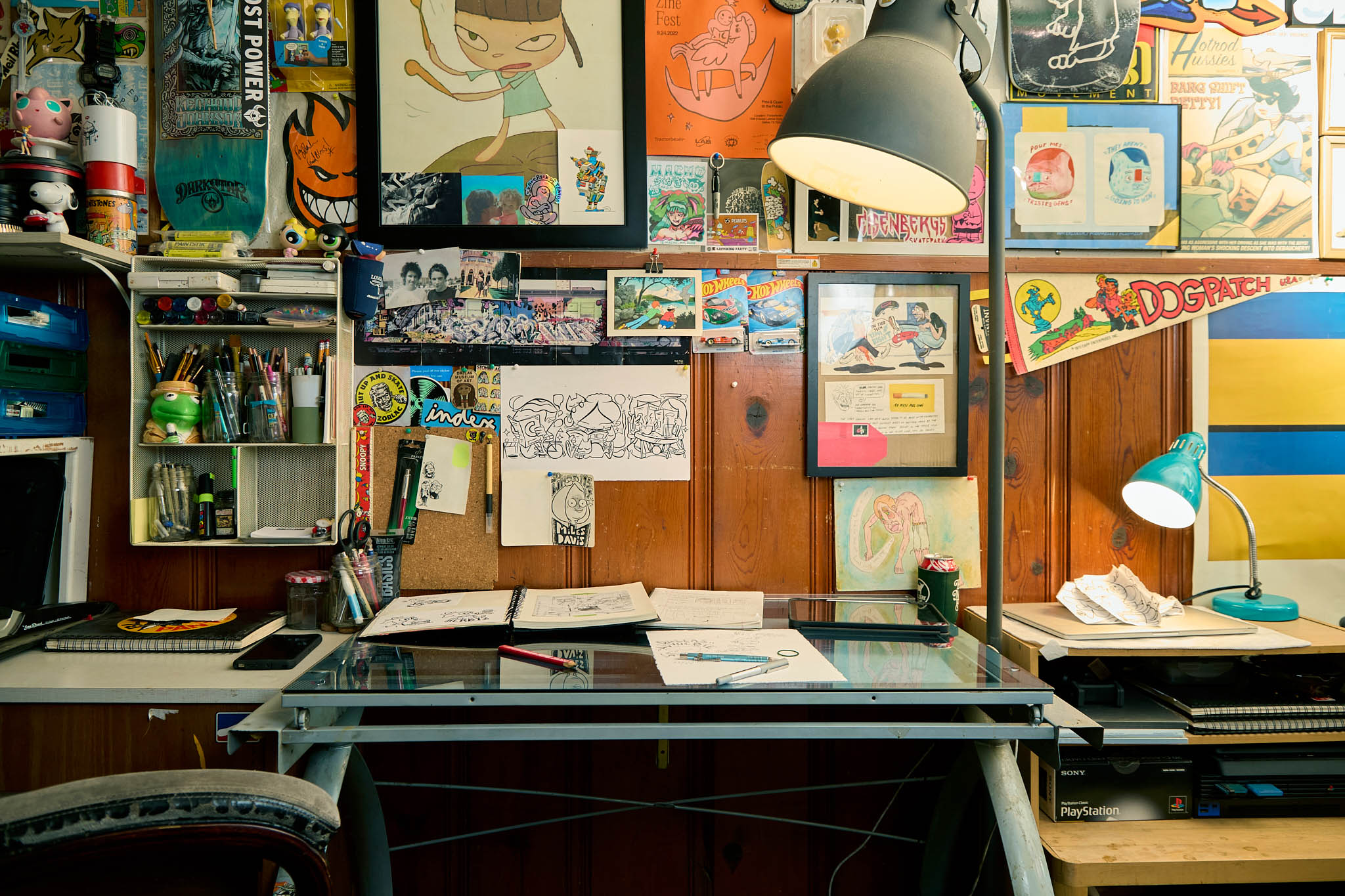
Some of the pieces from your last public exhibit had aspects of religion. Is that a big part of your art and identity today?
I grew up in a very religious family. We were in church quite a bit growing up. I’m not a serious person. My art kind of pokes fun at more of the setting of the church and not really the church itself. Having kids in church falling asleep or a lady in a big hat in your visual and you can’t see anything going on. It’s more of an exaggerated joke on the people, not religion. Just feeding off the sketches and feelings, things I might have felt as a kid growing up, like being a sinner is wrong and not giving 10% is wrong.
I wouldn’t say religion is a big part of my identity. It’s just a part of my life and I like to draw little aspects, just kind of flashbacks of my life and putting that out there. Religion was a very large part of my life for a long time, so it’s just going to make its way into my work, whether I’m kind of poking fun at something or trying to say something more serious. It’s more that’s me and that’s been my life.
What does art look like for you now?
These days, I work just pure passion. It takes some of the passion out of it, doing it for work. I really struggled with that when I was younger, trying to find myself, but ultimately for me, just having the freedom to create when I want and make it what I want is more important to me than what I’m necessarily getting out of it. I love sharing work. I love sharing my friends’ work. It’s more like a never-ending learning process and trying to create new things.
This interview has been edited for clarity and brevity.