Like murder mysteries, arguments about politics and unsolicited relationship advice from your weird Aunt Deb, it all started with a dinner party.
Well, many dinner parties. At potluck gatherings that met every month for years at the homes of Winnetka Heights residents who live south of Twelfth Street.
And over the course of these evenings, the neighbors discussed, among other things, the rapidly changing neighborhood of Oak Cliff and their concerns that their tight-knit community may eventually be taken over by developers.
Their neighbors to the north were protected from this worry.
The Winnetka Heights Historic District was adopted in 1981 and is the second largest historic district in Dallas. Spanning from Twelfth Street to Davis, and Rosemont to Willomet, the district preserves around 50 city blocks worth of prairie and bungalow-style homes.
South Winnetka Heights was interested in that protection.
So neighbor Michael “Patty” Evans decided to say “screw it.”
PRESERVING THE STYLE
While Winnetka Heights is a part of a historical district, which protects all historic architecture and impacts any modification made to a historic home, the residents of South Winnetka Heights were more interested in pursuing a conservation district application.
A conservation district is an ordinance that is laid out by neighbors during community meetings and is intended to preserve the physical look and style of the neighborhood it covers. Regulations are completely determined by the community members with minimum requirements in different categories such as architecture and development.
That feedback is then drafted up by city staff and ratified by the City Plan Commission and City Council.
South Winnetka is small, only around 95 residential homes that sit within the borders of West Twelfth Street, South Edgefield Avenue, West Brooklyn Avenue and South Polk Street.
The majority of the homes are one-story, and all but three were built before 1940.
Evans has lived in the area since 2005, and he says he joined the neighborhood because he was drawn in by the homes’ charming aesthetics.
It’s a sentiment shared by many of South Winnetka’s residents.
After witnessing a historic home on Willomet Avenue get demolished, and a new modern one replace it “within a matter of days,” Evans and other neighbors realized they needed to work toward conservation district status “sooner than later.”
He “didn’t know anything” about the process of becoming a conservation district, so he began reading online and calling city staff about the prospect.
“I think a lot of people don’t realize that, actually, most of the city employees will work with you a lot. You know, they don’t get calls like that very often,” Evans says.
In July 2020, nearly one year after the neighborhood’s first inquiry into the conservation district application, city staff determined that South Winnetka Heights was eligible for conservation district status.
The city verbiage that surrounds conservation districts emphasizes the importance of neighbor consensus in creating the districts.
“The neighborhood committee meets with property owners to ensure awareness of the process and active participation throughout the neighborhood,” says an introductory presentation that is given to the community at the start of a conservation district application. “Ensure all voices are heard and everyone is aware of the process.”
Evans, with a team of other involved neighbors, began canvassing the neighborhood asking for signatures in support of the conservation district application after several pre-application meetings.
Evans says that speaking with neighbors was a chance to inform them about the ins and outs of the conservation district application process. Ensuring everyone knew what the neighborhood was going to undertake was key to gaining support.
“Some of it was a language barrier, and my wife speaks Spanish, so I drove her around going door to door for a while,” Evans says.
By July 2022, 71 petitions were submitted, and 76% were verified by city staff, a wide margin from the 58% required.
EMBRACING INDIVIDUALITY
Kathi Kibbel moved to her home on North Clinton Avenue in 2000.
At the time, she says people throughout Dallas often responded with confusion when she shared that she lived in Oak Cliff.
“It was living on the edge a bit,” Kibbel says.
But, like Evans, she loved the charm of the homes in South Winnetka Heights. She and her husband spent several years waiting for a home in the neighborhood to be put on the market, and they jumped as soon as one was.
Kibbel was one of the original dinner party attendees who was interested in becoming a conservation district, although she credits Evans with being the “fearless leader” who got the process started.
But once community meetings began, Kibbel was sure to be in attendance.
Over the course of 10 meetings in seven months, South Winnetka Heights homeowners gathered with members of the City of Dallas Planning and Urban Design team to discuss everything from paint colors to parking density to roof form.
While South Winnetka Heights flew through the 10 community meetings required by the city — in comparison, neighbors in Lakewood have been through 15 meetings to expand the existing conservation district — Kibbel says the first few meetings showed there were some neighbors “on defense.”
“They were afraid we were going to make them do things that they didn’t want to do. I think a lot of people thought we were really going to be restrictive,” Kibbel says. “And then they realized, no, that’s not what we want to do. We’re just trying to keep people from tearing down a house or building some zero-lot-line or McMansion.”
Kibbel says there was no interest in using the conservation district regulations to force neighbors to change the look or feel of the houses that already exist. In fact, the whole point of the application was to “preserve the look of the neighborhood,” as it exists now.
While a historic district designation would strictly regulate things like materials used to build a home and keeping the paint colors of homes historically accurate, the nature of a conservation district allowed neighbors to build the quirks of South Winnetka Heights into their regulations.
It was important for the neighborhood to continue embracing individuality, Kibbel says.
“If you look at the front of my house, the colors, it’s obvious we don’t care what color you’re painting,” Kibbel, whose home is turquoise blue and trimmed in orange, says. “This would not be approved in a historical district, you know, that’s not historical colors. In the Bahamas it is, but not for Dallas in the 1920s.”
The regulations laid out in the conservation district ordinance will dictate parameters for any future development, once it is adopted.
If a house has a feature, such as fixed shutters and stained wood siding, that does not comply with the parameters, it can remain until it needs to be replaced. At that point, the element will have to be replaced in a style that complies with the conservation district regulations.
A GROWING MOVEMENT
The 10th and final conservation district meeting was held March 6.
Trevor Brown, chief planner for the city Planning and Urban Design department, commended the South Winnetka Heights neighbors on their swift and agreeable handling of the process.
Now, the department will use everything discussed in the community meetings to draft the proposed ordinance for the district.
That ordinance will be presented to the neighbors of South Winnetka Heights before it is taken to the City Plan Commission. If the commission approves it, the ordinance will be voted on by the City Council.
 Chad West, City Council member for District 1, has voiced support for neighborhoods that have expressed interest in becoming conservation districts.
Prior to the plan commission and City Council meetings, residents who live within the proposed boundaries, as well as those who live in the immediately surrounding areas, will be polled on their support for the conservation district and the results will be given to both the commission and the council.
While Lakewood is going through the process of expanding an existing conservation district, South Winnetka Heights is the first neighborhood to go through the process from scratch in over 10 years.
Brown says it has been so long since a neighborhood has created a new conservation district that there is not currently a staff member in the office of Planning and Urban Design that has been through the process before.
It has been “new territory” for him as much as it has been for the neighborhood.
And although they may not have realized it, South Winnetka Heights has been a trailblazer in what seems to be a growing movement.
Brown says that conservation districts typically “come in spurts,” and that they are often a community response to things like economic changes and development pressures.
“Right now there is increased interest in Oak Cliff for the formation of districts, in part because of the proposals in the West Oak Cliff Area Plan (WOCAP), but also because the area is seeing rapid development in and around established neighborhoods,” Brown says.
Across Oak Cliff, neighborhood associations have begun the process of drafting their request to be next on the list for a conservation district application process.
At the end of March, the Planning and Urban Design Staff held a meeting at the Turner House in partnership with Heritage Oak Cliff to inform neighbors about the steps to becoming a conservation district.
While there is not an official policy for how many applications the city can handle at a time, Brown says the process requires “considerable commitment of department time and resources.”
The department will likely stagger new cases it takes on, so once the South Winnetka Heights application has been finalized it’ll be an arms race for who is next to ensure their neighborhood stays exactly as they like it.
For Evans, and for all of the neighbors who began thinking about becoming a conservation district all those years ago at those dinner parties, an approval from the City Council will be the final chapter of this story.
But there may be an epilogue.
Street Sign toppers marking the South Winnetka Heights Conservation District will make things feel all the more official. And Evans wants to figure out how to raise money or obtain grants for “some of those historic fancy streetlights” to line the blocks of the neighborhood.
“That’s the big you know, the candle on top of the cake,” Evans says. “If we can get some lights. That’d be cool.”
CONTRIBUTING STYLES:
Most homes within South Winnetka Heights were built before 1940 and fall within the following two styles:
Arts and Crafts
The 20th century Arts and Crafts home style was an early modern movement that rejected the historical precedent of decoration and opulent design. The homes modernized ornamentation by simplifying it. The Arts and Crafts movement is credited for its influence on prairie style homes, which are found throughout Winnetka Heights, and craftsman style homes.
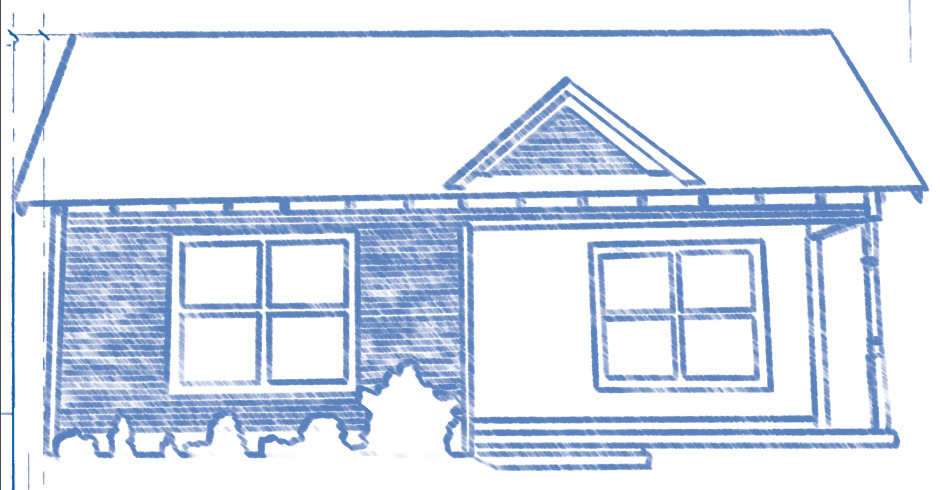
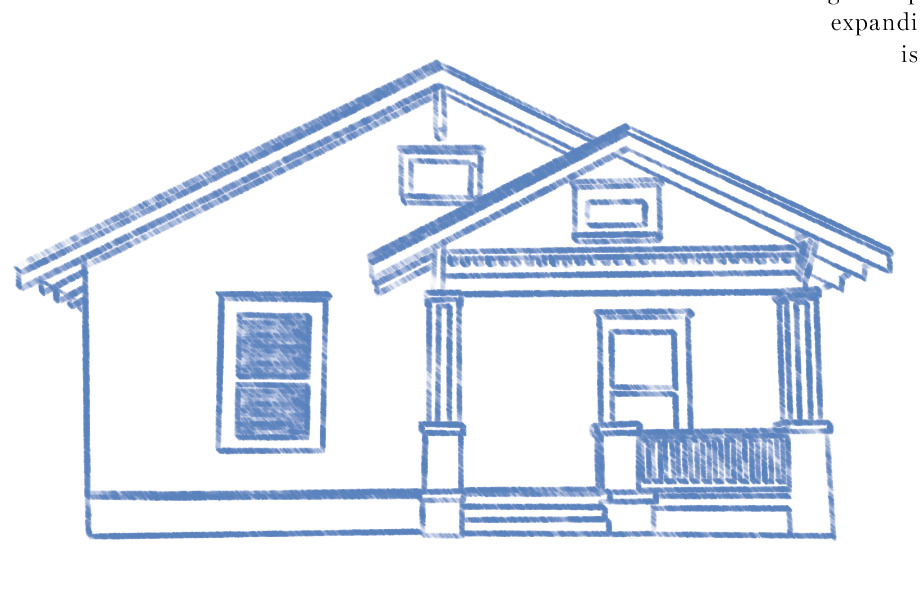
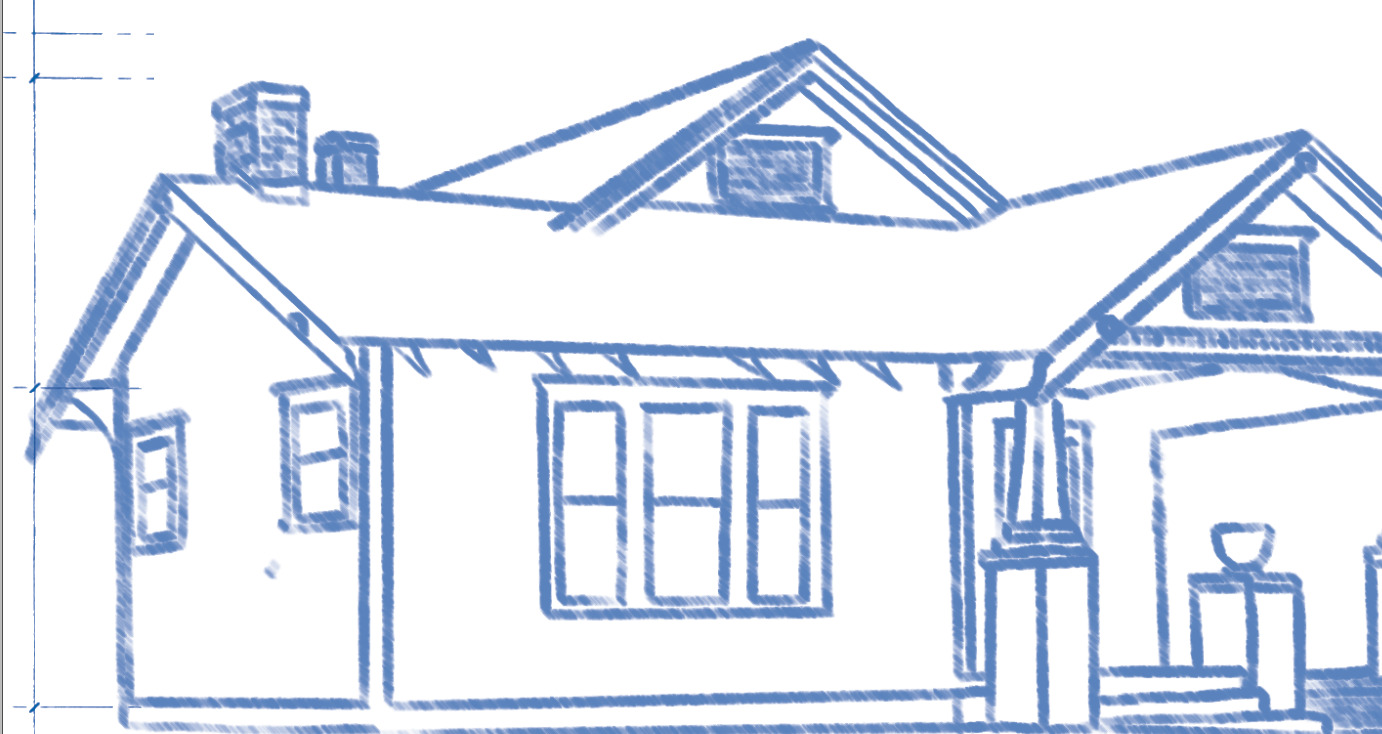
Key Features: Low-to-the-ground facade, low-pitched roof with wide eave overhangs, prominent porches, framed windows.
Transitional Craftsman Bungalow
The word bungalow can be used to describe a small home of any style, but in South Winnetka Heights, the bungalows act as a stylistic bridge between the Arts and Crafts and Craftsman styles. The relatively small homes were often built with the working class in mind, and were popular throughout the U.S. for the first few decades of the 20th century. Because these homes are a stylistic transition, many elements reflect the true Arts and Crafts homes throughout the neighborhood.
Key Features: Low-pitched and front-gabled roof, large porches often supported by columns, one story, beams under gables.