Walking up to the George Peabody Elementary School off of Jefferson Boulevard and South Westmoreland Road, children are scattered on the main playground. Underneath the tan shade, kids run in and out of the obstacles in their khakis paired with a polo on a summer afternoon.
Photography by Tanner Garza
Photography by Tanner Garza
PeabodyElementary-5
Photography by Tanner Garza
Photography by Tanner Garza
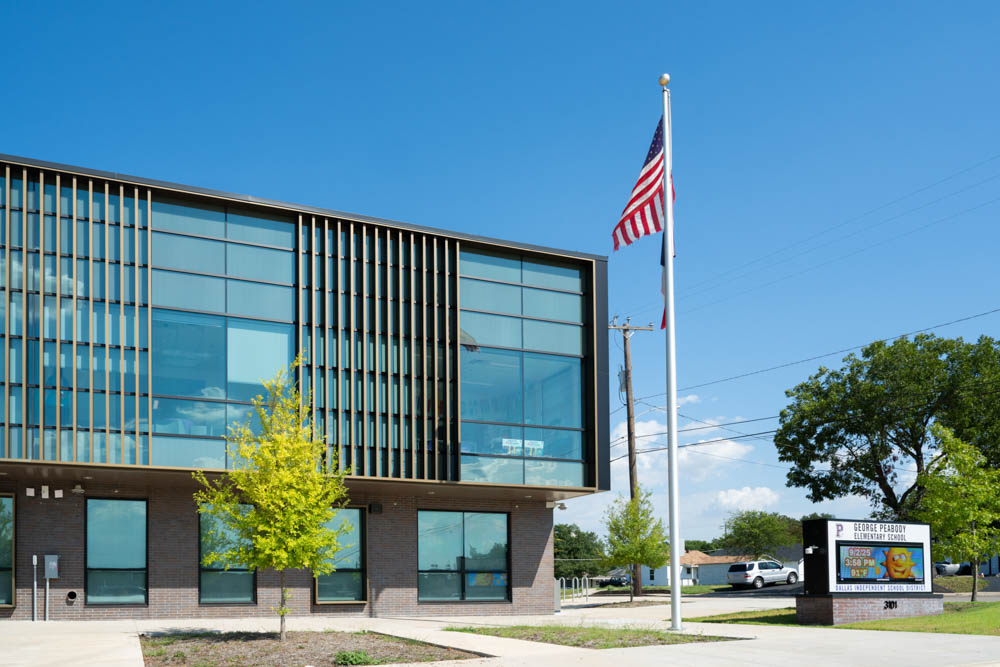
Now complete with its own parking lot — rather than having staff walk from parking at a church down the street — and a bright front office with seating for visitors instead of squeezing parents into the school foyer, Peabody is a far cry from the beige brick box built in the 1950s.
“When it rained, we cringed,” Principal Sherri Rogers-Hall says. “Because we knew that it was a very strong possibility that it would rain inside the building.”
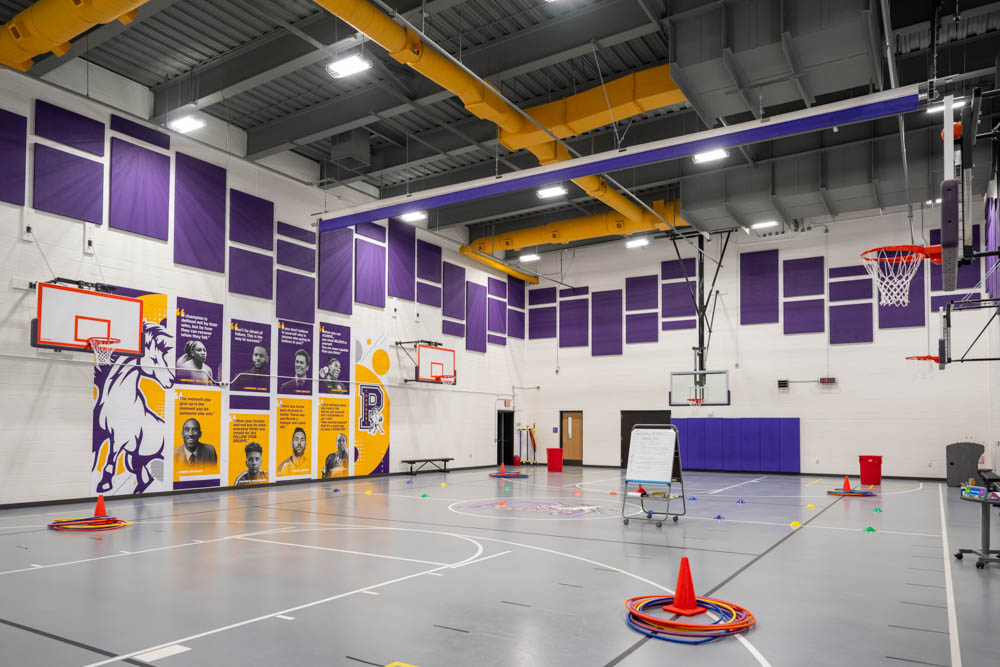
Additionally, students were out in portable buildings due to the lack of capacity for all grade levels. The third and fourth grade classrooms were joined by a portable gym, an odd accent to a Dallas suburban school that even the superintendent didn’t realize was there.
“I remember when Dr. Hinojosa came and walked the school just to visit. He did a visit, walked around, saw the portable gym, and he was like, ‘You still have one of those?’” she says. “It had become so normal to me it didn’t dawn on me that it was strange.”
The 2025-26 school year is a few months in, and even though it’s been one full year in the two-story building, Rogers-Hall is quick to correct that the school is still so new.
The update was long overdue, and after a community push following approval of a $3.5 billion bond in 2020 (the largest bond in state history at the time), the meetings began to gain input for the future of the Peabody building.
That’s where Pfluger Architects, a firm dedicated to designing schools, comes in. Christian Owens worked as the director of design for the Peabody project. Sitting in on meetings around the community, one theme became clear: the concept of home.
“We heard a lot about home, feeling, welcoming, warming, creating an environment that inspires,” he says. “If I’m a visitor to a house, I want to welcome you in, (we enter) into the living room and let’s have a conversation. And so that really drove kind of the inspiration of design is this porch idea, right? The first approach to your home, let’s sit on the porch and let’s talk and really, where this site was located, and the school was located, it was adjacent to a lot of the characteristics that we heard.”
The new building remains on the same plot as the last campus, in the middle of the neighborhood. Since opening for class during the last school year, the campus is still working on adding the final touches.
Photography by Tanner Garza
“You know, there might be a socket that needs electricity, or there are things that are still under warranty that need to be fixed, the elevator for example,” she says. “So we’ve always had access to everything. It’s just that we’re trying to get everything working as it should.”
Even with some electricity troubles, Rogers-Hall says that you don’t even need the lights on at times.
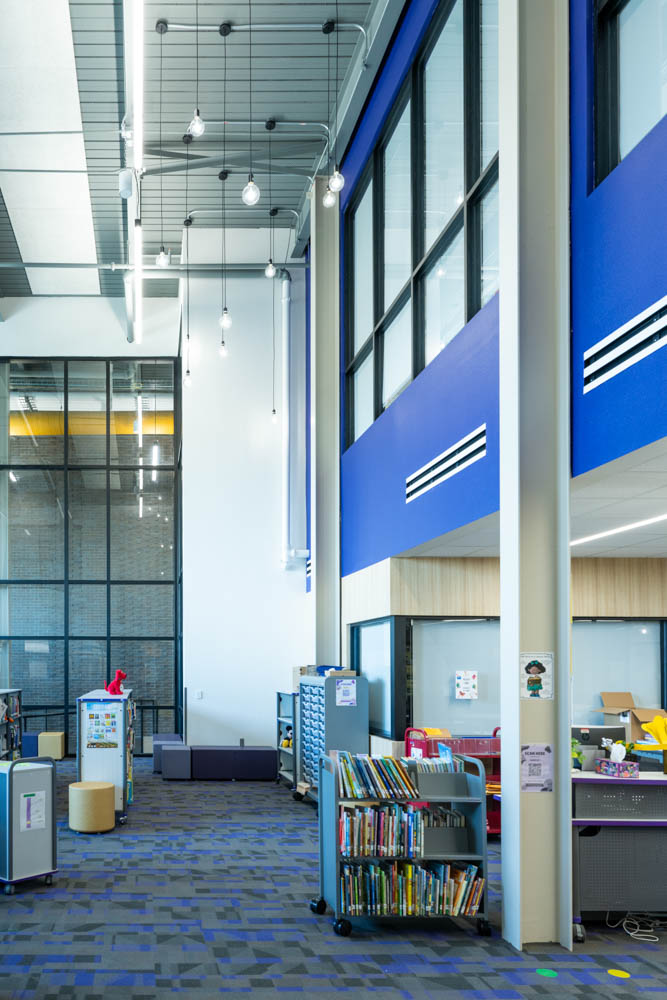
“I mean, you can just open the blinds and be fine,” she says. “So to me, that makes it even more welcoming.”
Other aspects of the design that help
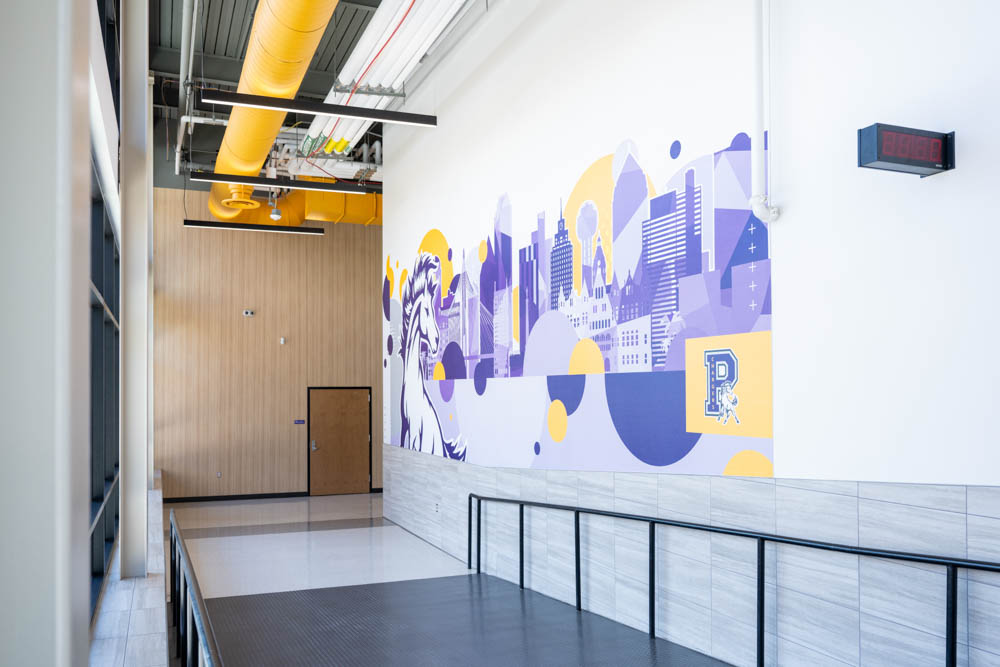
make the community welcome is the large mural of the Dallas skyline in the school’s purple and gold, floor-to-ceiling windows looking out to the park on the “porch” and pops of color found in the hallways. On the stairs, college and university names and colors lead up to the second story.
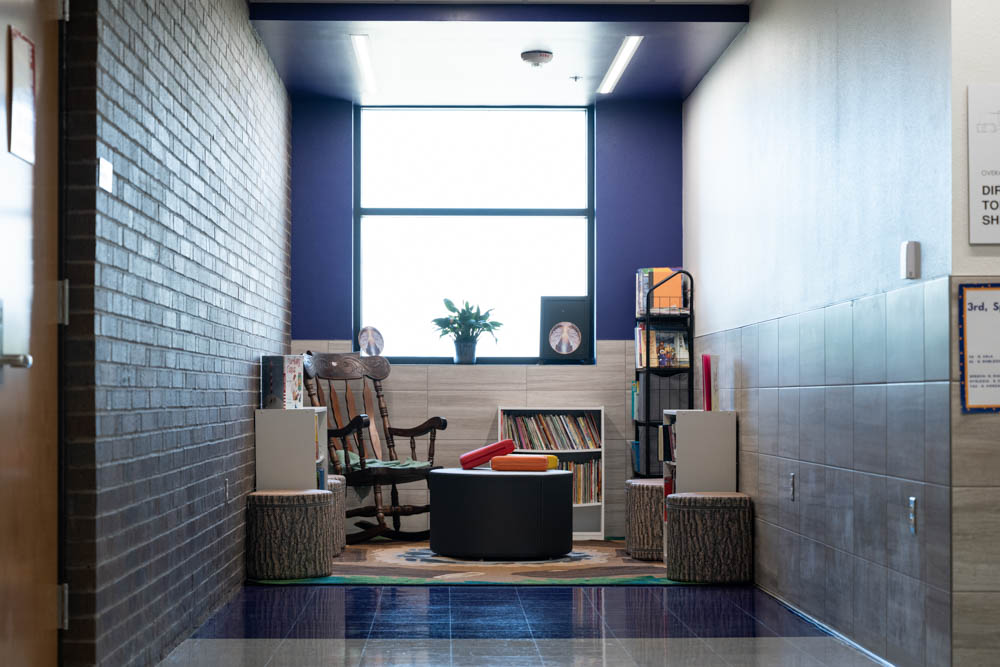
Throughout the hallways, there are
pockets where students can group up
to have a flexible and modern learning experience outside of the four walls of the classroom.
“The classroom that you were designated to with that teacher, that’s no longer the case,” Owens says. “Educators, we tried to give them as many diverse opportunities spatially, to create opportunities for them to work with a small group of students or for students to work together on projects. And so the collaboration areas that are outside the classroom are there to where if I’m an educator, I can divide students in the groups to learn together, kids can learn from each other.”
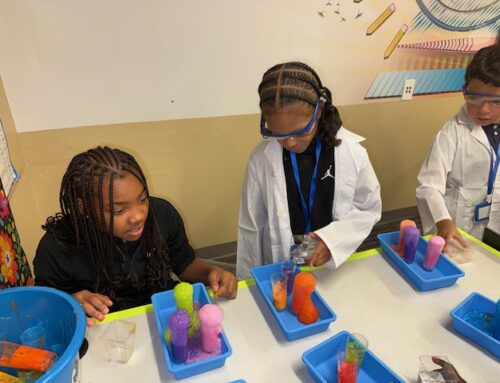
Another modern aspect to the building is the maker space, where learning takes place through hands-on projects.
“It’s no longer about looking at a presentation or getting a lecture. I can quickly go to learning through a project, learning with my peers,” he says. “And so the elementary is designed to create as much diverse opportunity through space as possible.”
This new type of learning for Peabody students and staff has been well received.
“We have everything,” Rogers-Hall says. “The classrooms are very spacious, they’re bright … Pre-K through second grade classrooms have restrooms inside of the classrooms. So, I mean, it’s just better altogether. Just more accessible for everyone.”