Energetic footwork, fluid turns. Lively Latin beats of the clave and maracas fill the room, with greetings of “Hello” and “How are you” from the 25 dancers. Rebeca Trevino, 23, and Carlos Cortes, 21, have begun a new month of their young venture: teaching salsa classes through Mudanza Movement at the Oak Cliff Cultural Center.
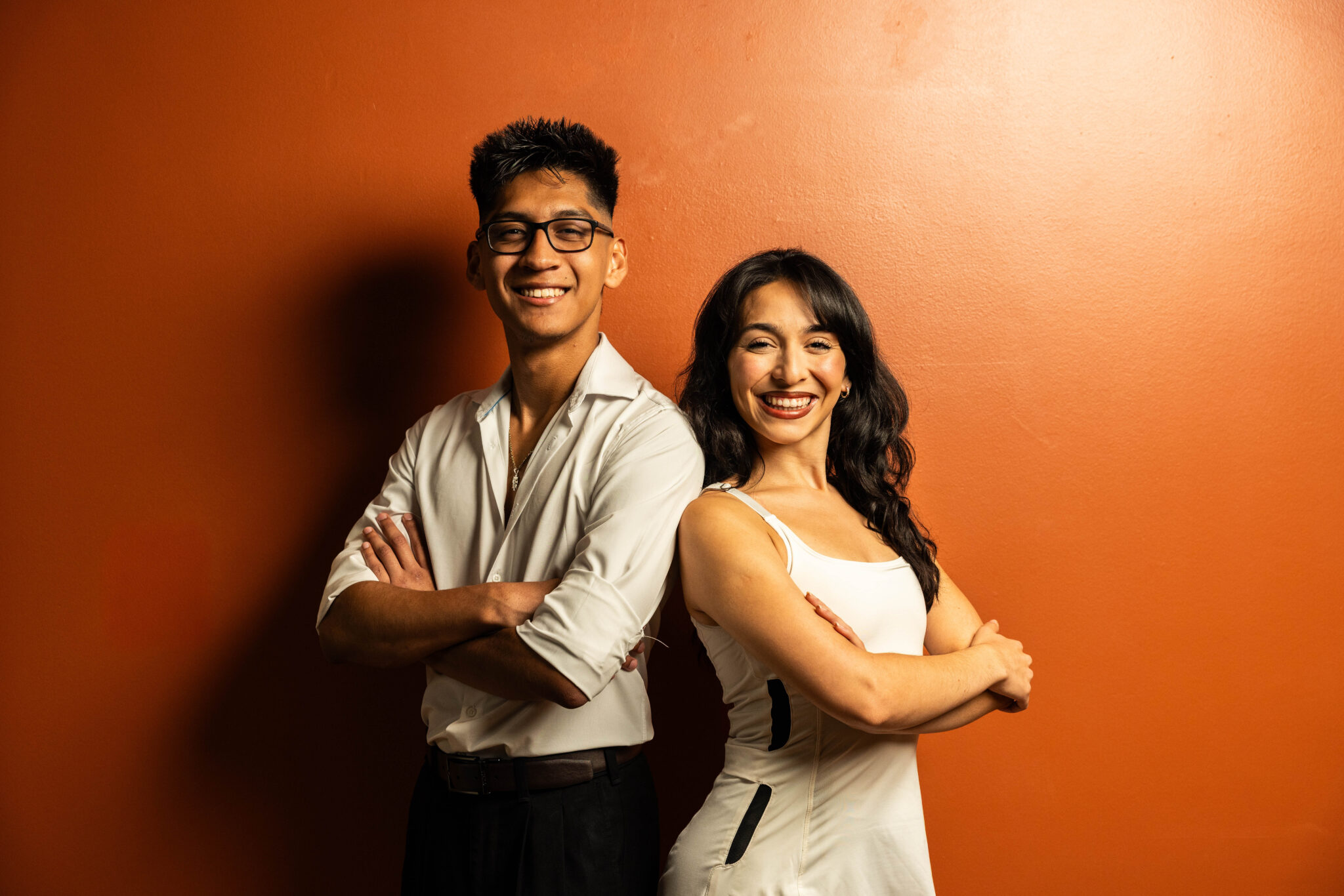
Photography by Kathy Tran
With a synchronized “alright,” the class has begun. Students line up into three rows facing the pair that separates the learners from the mirror.
Although they didn’t grow up religiously listening to salsa, both Cortes and Trevino agree it gives off a nostalgic feeling. The genre of music reminds them of Sunday morning cleans or attending quinceañeras and weddings of their family members.
Both dancers got their start with salsa due to the influence of their mothers but at different ages. When he was 11 years old, Cortes attended classes at Calirumba, formerly located in the Valley View Mall. His mom had an interest in learning the art form when she stumbled across salsa classes for children.
“And so that’s also how I got kind of into the performance scene of salsa,” Cortes says.
A doctor recommended dance classes to improve stability for Trevino’s mom, who was suffering from dizzy spells.
“So she asked me to go with her, and she didn’t end up liking them, especially because they were in English and she only speaks Spanish,” Trevino says. “But, I went with her, so I stayed, and then I really liked it.”
Trevino started salsa locally during a break from Wesleyan University in Connecticut, where she studied architecture. Once she returned to school, she continued her newfound passion by driving to New York for salsa classes. She later graduated with a double major in architecture and dance with a minor in art history.
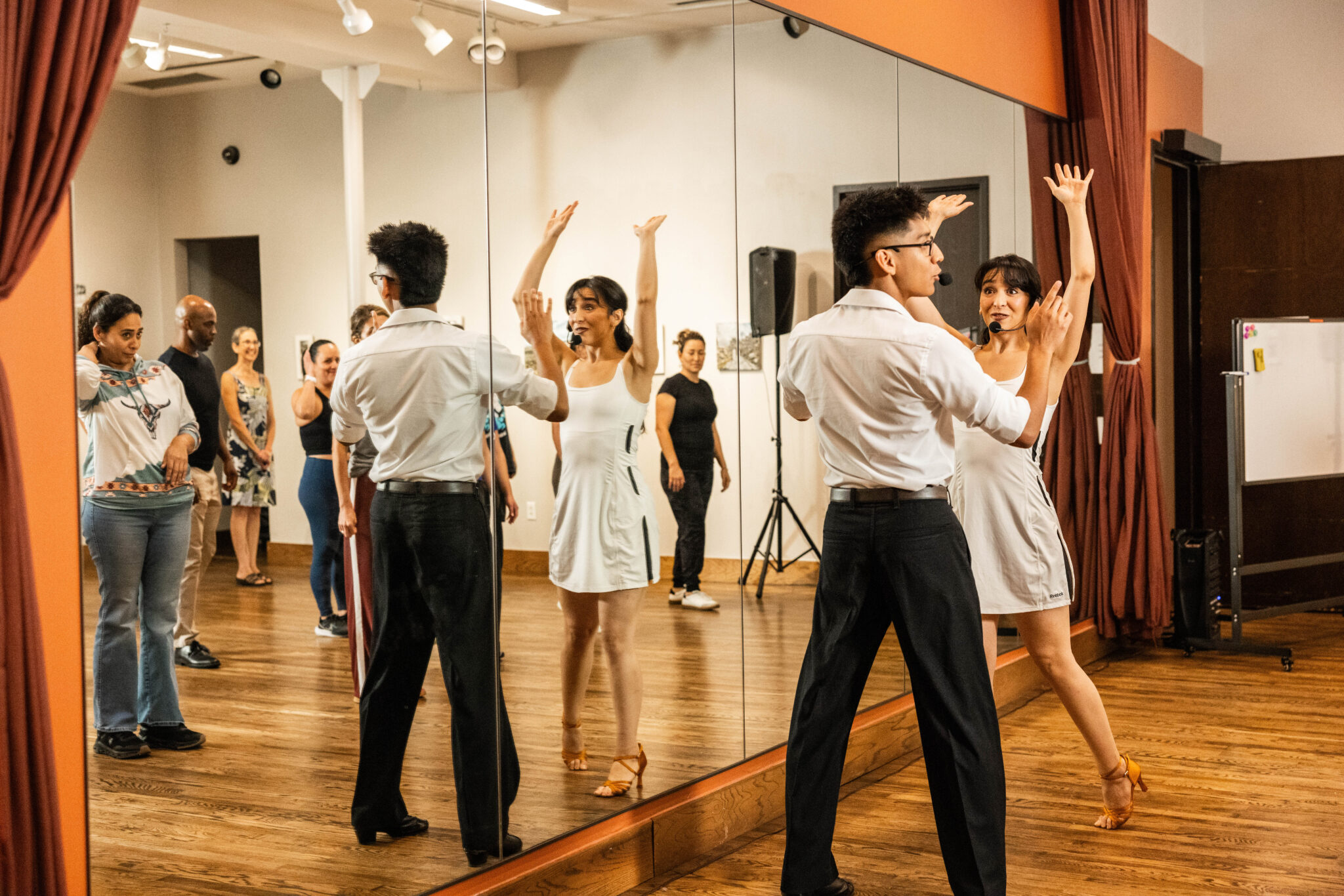
Photography by Kathy Tran
People come to the Mudanza Movement classes for many reasons. Like Trevino’s mom’s case, sometimes it’s to get moving, but other times to heal more than the physical.
“I would say one of the more common reasons is because they just want to, sometimes it’s actually therapeutic for people,” Cortes says. “A lot of times people are struggling with personal issues, and they just want an escape.”
Also, Trevino says people are drawn to the music and how salsa looks.
Some people even want to learn salsa because of Bad Bunny or because it has become more popular in our culture too, she says.
The students at the first beginner class of the month include a variety: a pair of mother and son, some affectionate couples, two teen girls that could be sisters. Each has their eyes glued to Trevino and Cortes as they go over the counts of the basic salsa step: 1, 2, 3, 5, 6, 7 with a pause on 4 and 8.
“Right, left, right. … Left, right, left,” Cortes says.
Trevino had been volunteering occasionally to teach salsa workshops at the center since 2023, sometimes with a grant from her university By planting that little seed of salsa in the center they requested more, she says.
“I didn’t graduate and be like, ‘I want to teach dance.’ It just kind of happened,” Trevino says.
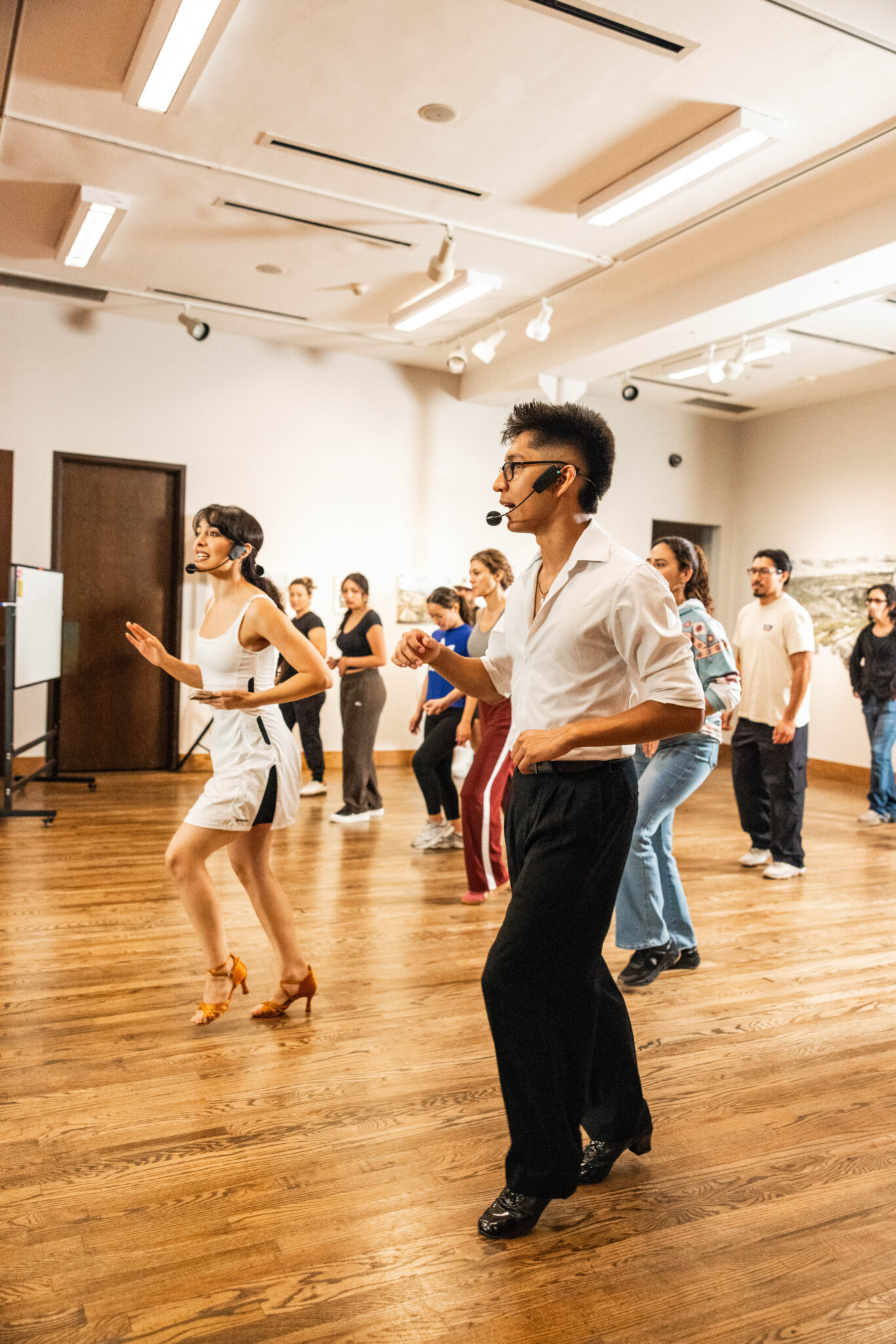
Photography by Kathy Tran
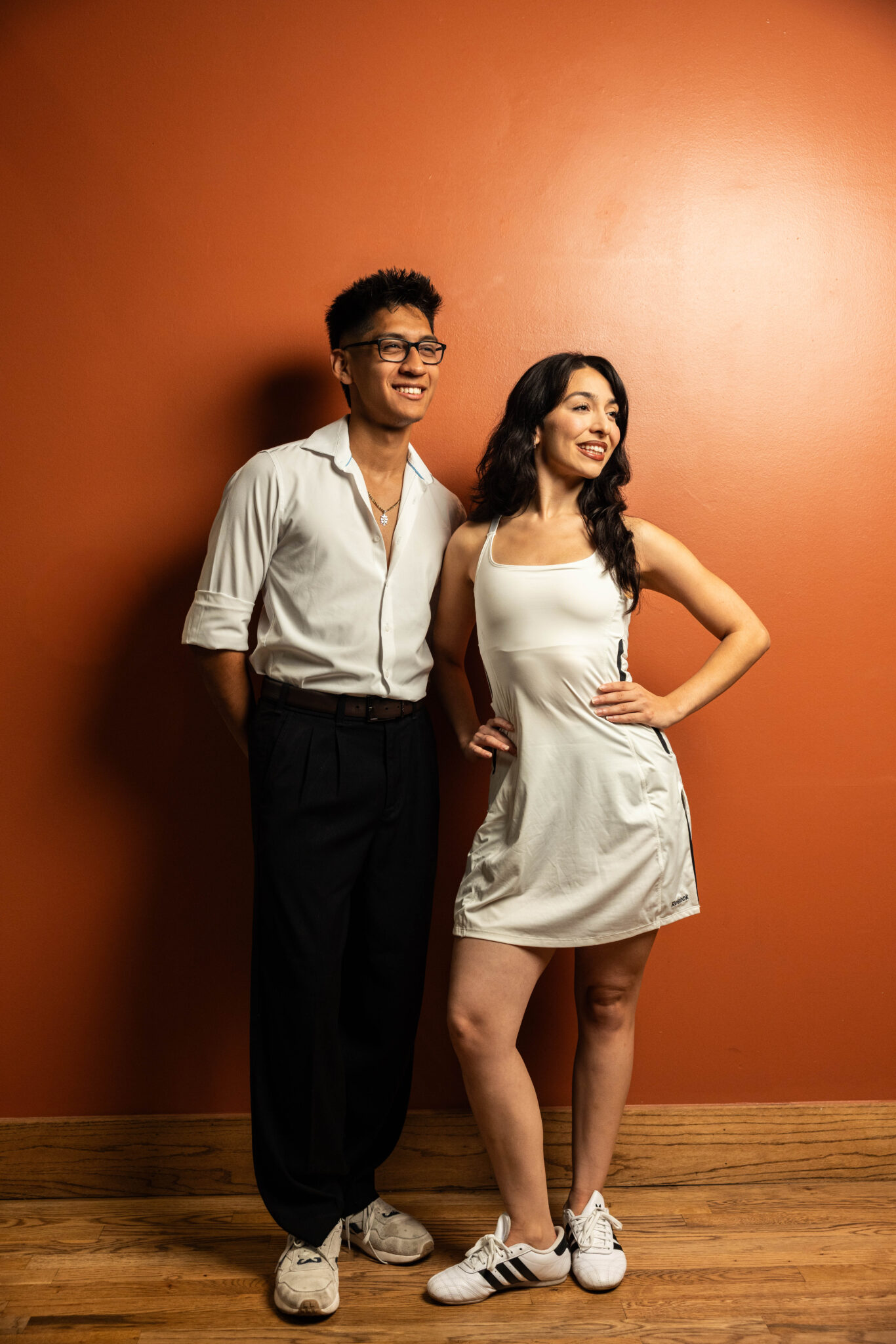
The two met here in Texas through dance classes and consistently crossing paths at local salsa socials. They would train together on and off as Trevino returned to college and Cortes began traveling often.
Finally, their timelines aligned in the summer of 2025 through the opportunity to teach at the Oak Cliff Cultural Center. Trevino says that by providing access to classes at the center, they are – to her knowledge – the only option for learning Latin dance in Dallas.
Cortes says he started to take dance more seriously once he turned 18 and while he is currently studying business at the University of Texas at Dallas, he doesn’t really see himself doing anything else but dance. Within the last year, he has decided that he wants to pursue dance professionally.
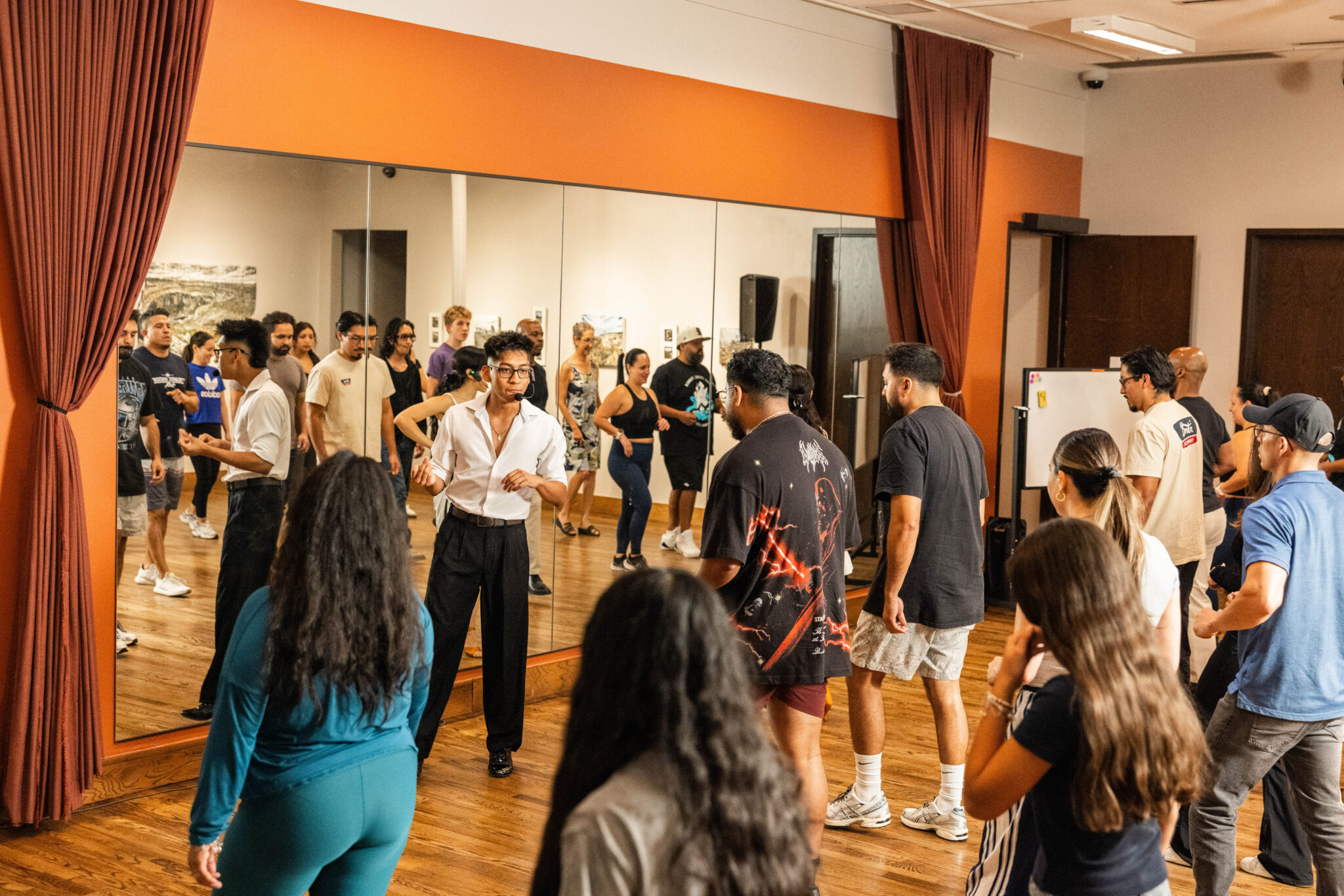
Photography by Kathy Tran
“I really started to enjoy dance, especially getting into the social dancing aspect of it and meeting new people and traveling,” he says. “I think that was one of my favorite parts. I thought about making this into a living. So I knew that teaching classes would also be something that I can (do).”
High fives fly as students rotate from the front row going back. No matter who you came with, you connect with others throughout the class. You won’t be able to know the timing or perform the dance without the partner connection, Cortes says.
“We always like to remind our students that dance is like having a conversation,” Trevino says. “Our point of connection in dance is our hands, at least in salsa, right? Especially in partner dancing because that’s how it gets. And so we always try to facilitate that connection so that our students can have a smooth conversation with one another.”