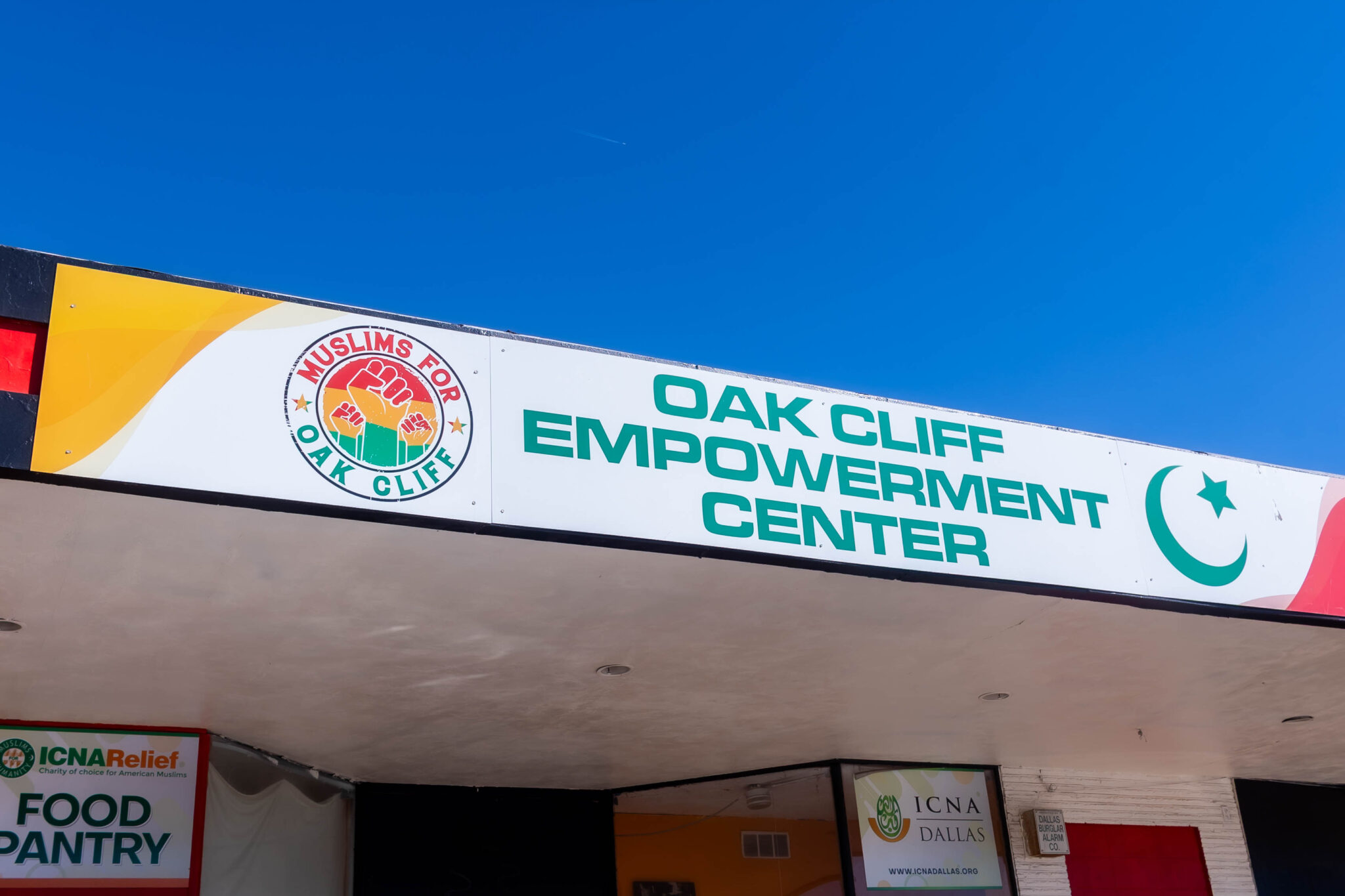
A red, yellow and green Black power salute circled by the phrase “Muslims for Oak Cliff” and a nod to the Ottoman empire’s Islamic identity with a crescent moon and star frame the building’s name: Oak Cliff Empowerment Center. A mosque that focuses on raising the banner of Islam in the very place they call home.
Photography by Amani Sodiq
But the center is more than a space for worship — it is a place that focuses on providing compassion and service to the community regardless of religion.
As you enter on the left, a crockpot and paper bowls sit ready for serving, men are gathered around a Socratic seminar style of tables for the last Men’s Taaleem (“education” in Arabic) of October, where they plan to conduct discussions on global topics and apply those chats to the Quran. The right hosts a table filled with tissue paper and gold polka-dot bags.
There, Yasmin Washington is packing compassion bags for women who have experienced gun violence, domestic violence, sexual abuse or incarceration. She fills each bag with a blanket, a hair brush, sugar scrub, soap, a candle and a copy of the Quran with a letter highlighting verses to lift their spirits.
“Sometimes it’s just verbalizing to them, ‘You don’t deserve that,’” she says. “‘You don’t have to deal with that. You don’t have to do that. We have resources for you. Let me help you do this and let me help you do that.’”
Since September 2023, the center has offered its religious services along with community violence intervention, support groups, children’s tutoring, mentorship for at-risk youth, re-entry programs for Muslims returning from incarceration and a food pantry.
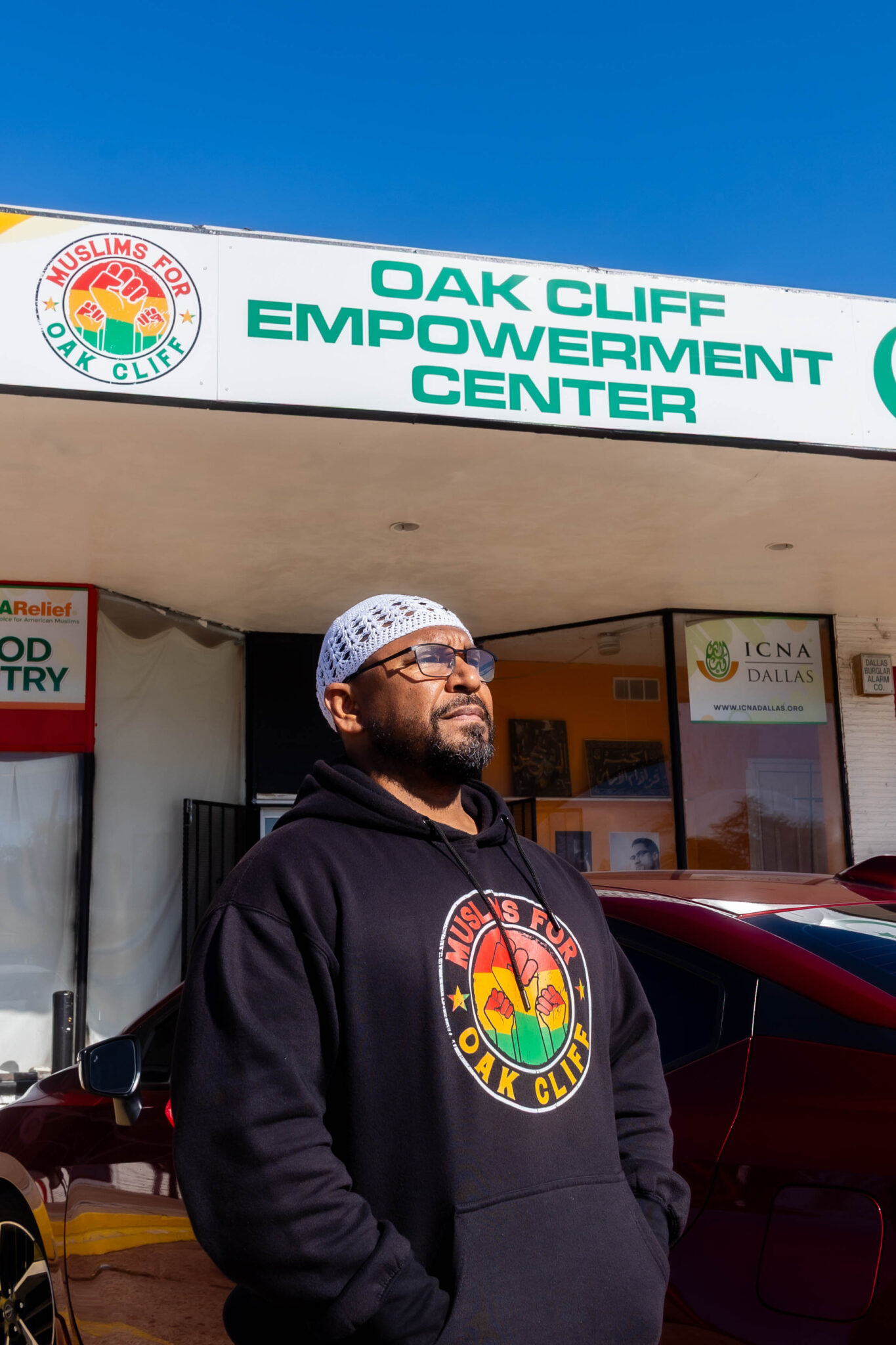
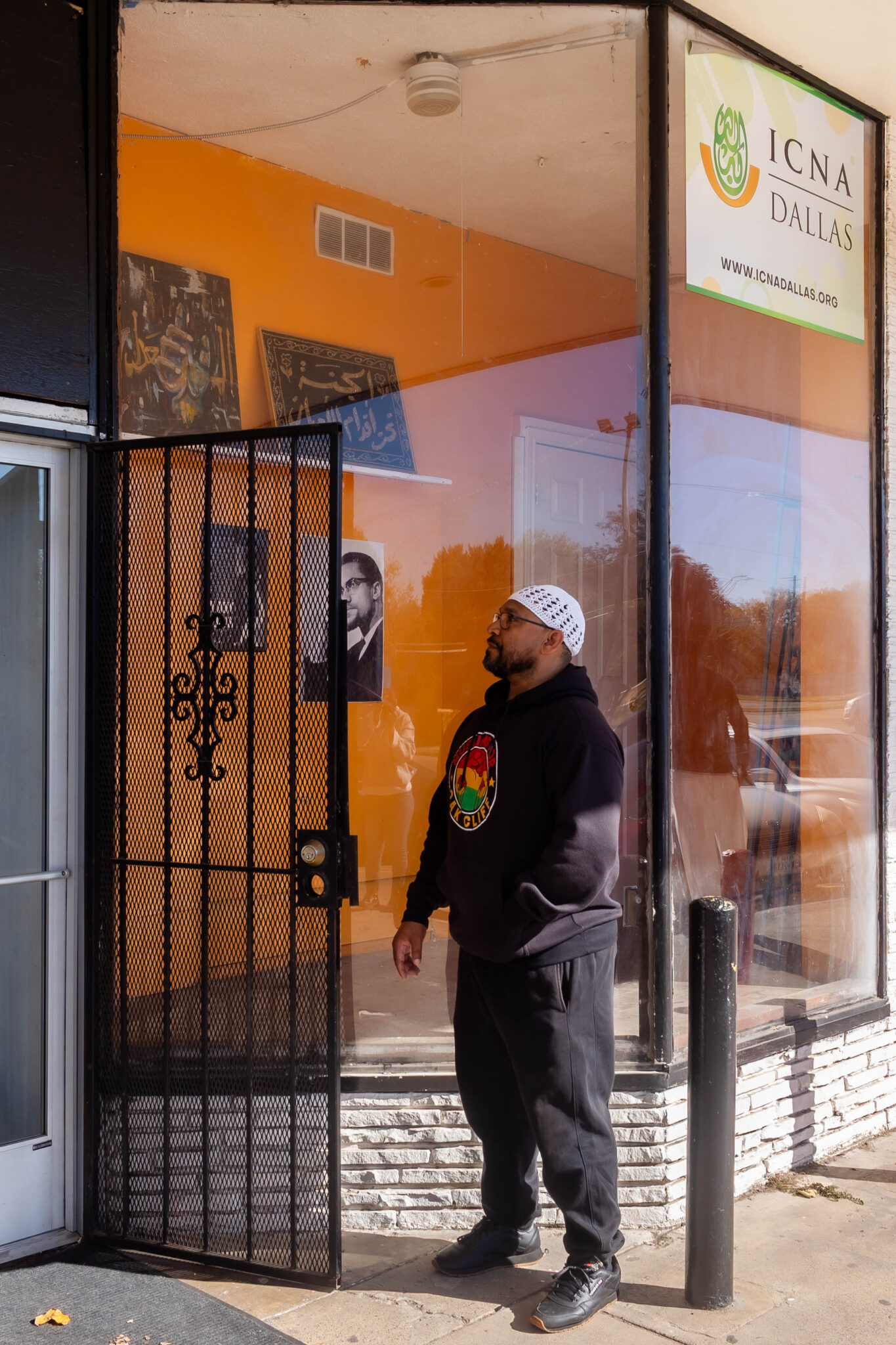
Executive Director Victor Alvelais founded the center following his own re-entry from incarceration. After converting to Islam during his 15th year in prison, he says he wanted to help his fellow men behind bars.
After serving 26 years, he was released during the COVID-19 pandemic. He quickly began working with the City through the Youth Advocate Programs Inc.’s Dallas CRED violence interruption team, later becoming the director in 2022.
“I had only been home a year, and that’s when I met a couple of Muslim brothers, and I was telling them what I was doing,” he says. “I said that there are some Muslims throughout the city who want to be proactive and go into some of these disadvantaged communities. And that’s how we started on the work.”
He connected with Dallas members of the Islamic Circle of North America. They believed in his idea and helped him gather funds to start a space for prioritizing nonviolence and assistance.
Navaid Barney, a member of ICNA who discovered the empowerment center in January, says he felt that he wanted to do more for social justice issues than what felt to him to be superficial.
“Eventually, somehow, someone told me about the Oak Cliff Empowerment Center. So I started coming here once or twice a week and I saw the actual work that was being done,” Barney says. “They’re going up to the community. They’re talking to the community. They don’t care to make someone Muslim, they’re just trying to do the right thing.”
On this Monday, Washington and Alvelais pile into a van and head for the government-subsidized apartment complex Peoples El Shaddai Village, also known as “Butter Beans.” There, they greet some kids out bouncing a basketball around without a goal to shoot at. A woman and her family drove up beside them, asking if the pair had a food bag.
“We took them up to the park yesterday,” Alvelais says to her. “I give you my word. Yes, they’ll bring something. Don’t let me forget sister. I got you sister.”
After he daps up the children for a farewell, the two head back to the center for the sunset prayer prior to the Men’s Taaleem.
Abdul Ibrahin Hammid, who joined the center after his release from incarceration earlier this year, leads the Maghrib Prayer, a prayer specifically said from sunset to dawn, for the five men that join him for tonight’s taaleem.
Washington joins in the back on her own individual prayer mat while the men in front of her share a long running one with multiple spots. The six face qibla, which is toward Islam’s most sacred building, the Kaaba, located in Mecca.
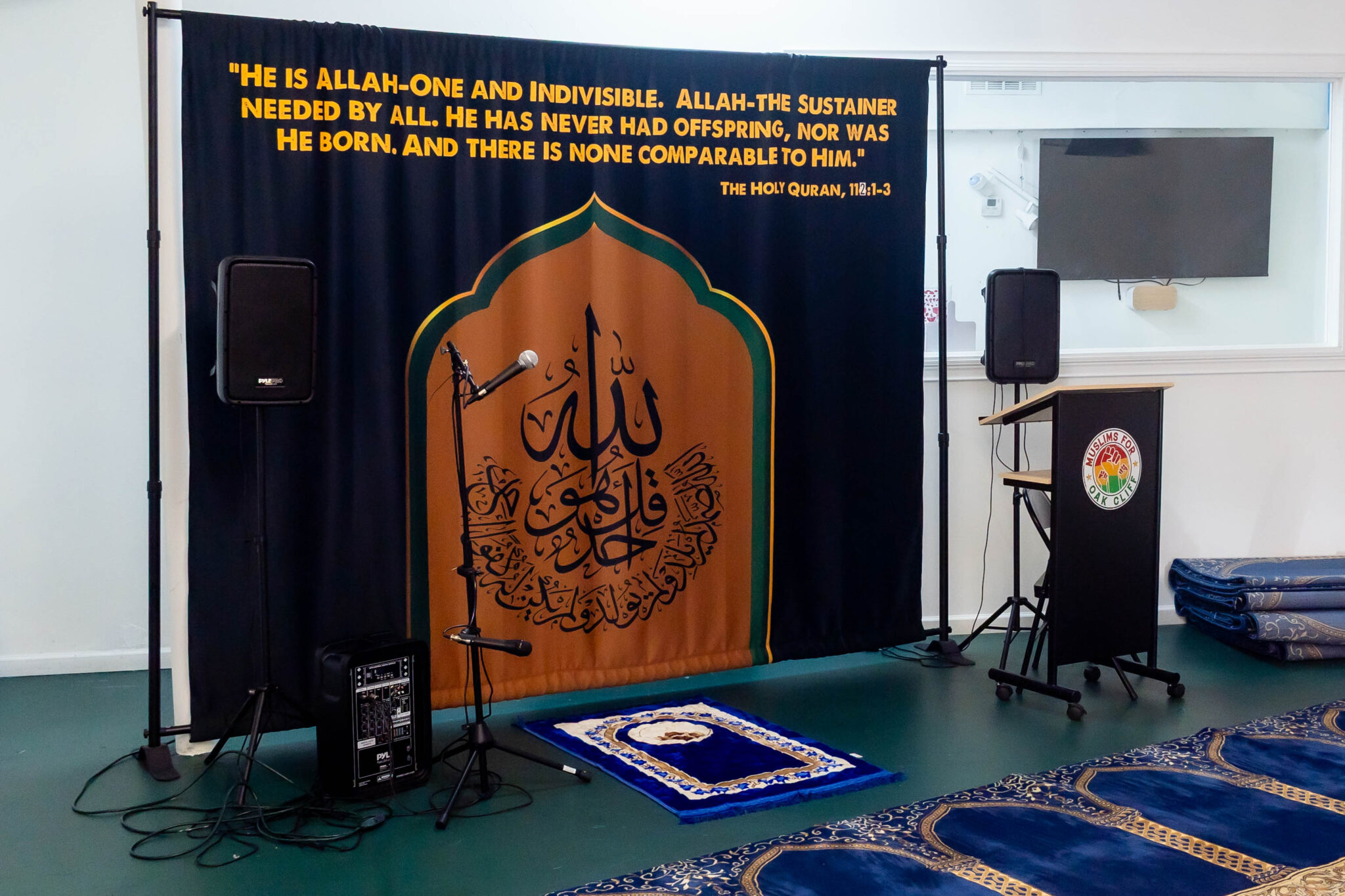
Hammid later explains the practice of prayer is called salat in Arabic and is one of the Five Pillars of Islam. The other four include the profession of faith (shahada), alms (zakat), fasting (sawm) and pilgrimage (hajj).
The prayers are in Arabic, which is essential to learn to understand the Quran. Unlike other religious texts, the words aren’t up for interpretation between different versions.
The Monday Men’s Taaleem is just one of many programs at the center. Tuesdays they host the Women’s Support Group followed by the Sister’s Circle on Wednesdays for Muslim learning. The Men’s Support Group takes place Thursdays.
Alvelais says their Fridays are like a typical Sunday service. Jumuah (“gathering” in Arabic) includes a sermon and prayer open for Muslims and non-Muslims alike. Sundays host programs dedicated to local youth with a Kids Islamic School and a community program called Helping the Kids Succeed. Each fourth Sunday of the month, the empowerment center hosts an open house with free food, medical screenings and games for kids.
The Oak Cliff Empowerment Center continues to grow with goals to open local re-entry housing for Muslims leaving prison, establishing a job training program and Oak Cliff Muslims Chamber of Commerce, and roll out internship opportunities for Muslim youth in 2026.
“We believe in this corner, this little slice of heaven in southern Dallas,” Alvelais says. “I would like our other brothers and sisters, socially conscious individuals, Muslim or not, to take a look at being here and helping it transform this part of the city.”