
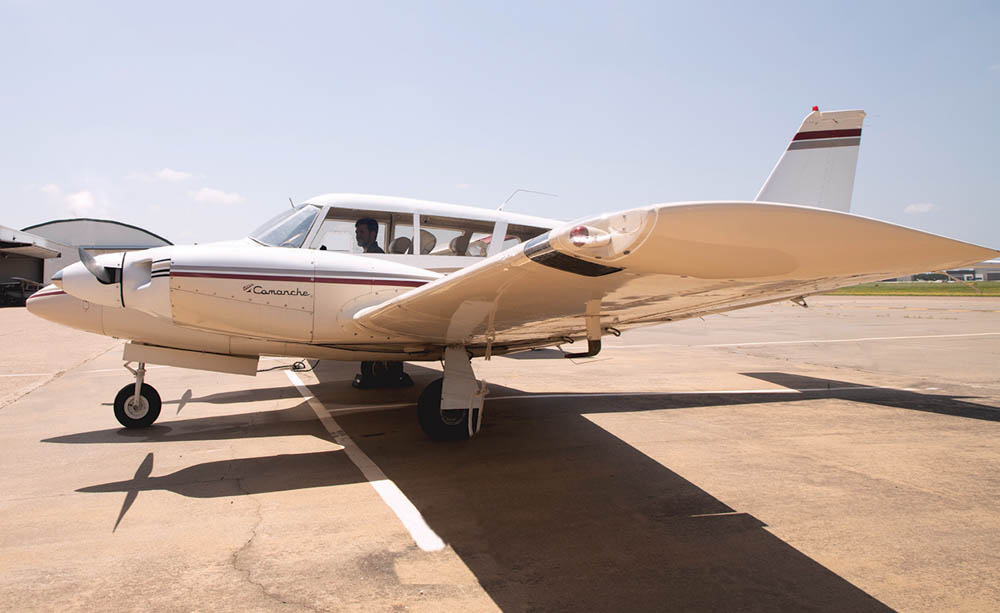
Photography by Victoria Gomez
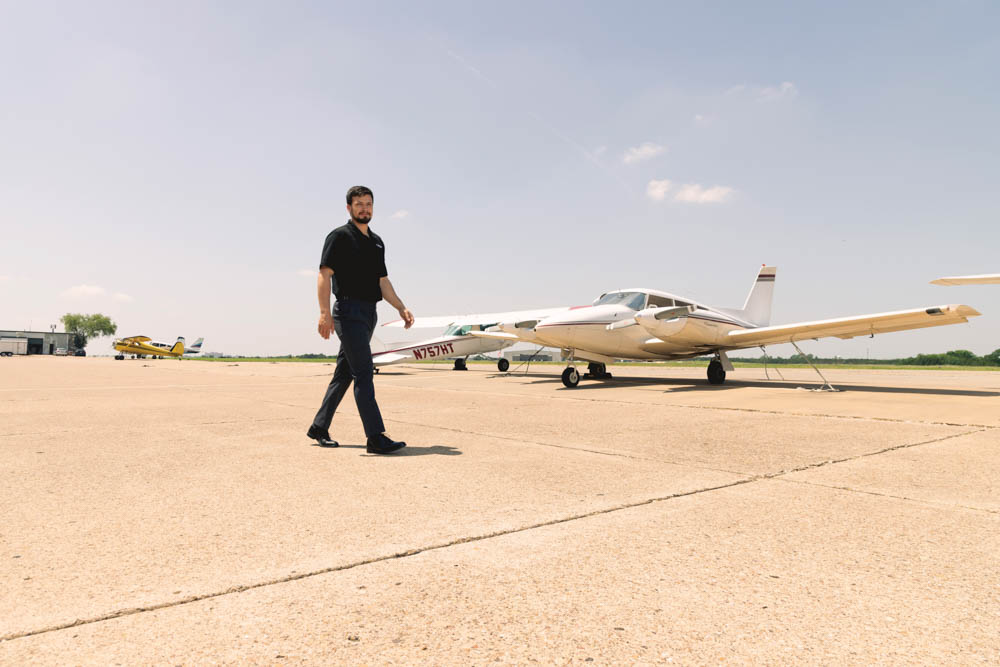
The first time Jack Parrish flew a plane, he was four years old, sitting on his father’s lap in what he thinks is Stearman.
Flying is hereditary for the Parrish family. His grandfather Lieutenant Roger Parrish was a commander of the U.S. Air Force Thunderbirds and later became a pilot for American Airlines.
His 23-year-old brother Michael is a flight instructor.
After spending two years in seminary, Jack realized he was supposed to be a pilot and flew for American Eagle, a regional branch of American Airlines.
At the age of 23, during the onset of the COVID-19 pandemic, Jack started developing a flight academy.
“My brother had just become a flight instructor and he needed a job. And there really weren’t many at the time just because of the COVID stuff,” Jack says. “So I was like, ‘Let’s start a flight school together.’”
The plan was for Jack, who was still working at the airline, to run the business side, and Michael to handle the flight instruction at what became Parrish Aviation Flight Academy at Dallas Executive Airport.
The duo started in 2020 with a single two-seater plane.
“We had the first three students start and they are students who live and have grown up in the Oak Cliff area,” Jack says. “It’s really neat.”
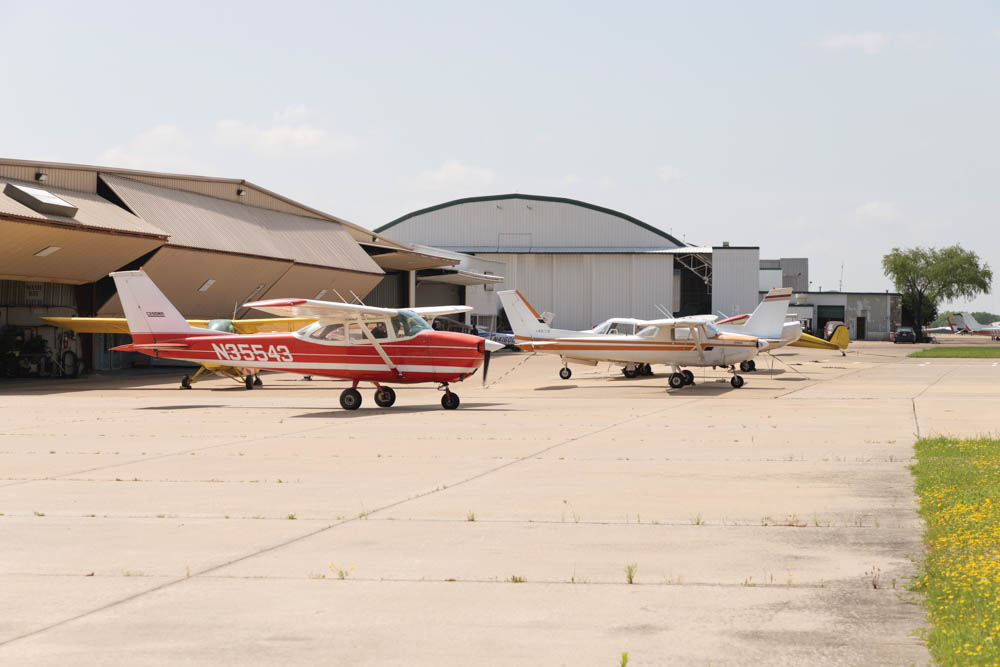
They’ve since amassed a fleet of planes, including Cessnas, a Piper Twin Comanche and a Ximango Motor glider. It’s one of the few programs in the nation to incorporate the latter plane.
For the nine-month program to be cost-effective, they had to have an in-house maintenance program and at least five planes, Jack says.
“That’s a really hard part there and once you get past that, then it’s a lot more viable to run a flight school,” Jack says. “So getting beyond that point was a challenge.”
There are now three full-time mechanics on staff, and Jack is actively looking for lenders to help students finance their education. The Career Program costs $83,000. To qualify to fly commercially requires a little bit more effort. Theoretically, a student could test out of core classes with the College Level Examination Program (CLEP), attend the aviation academy for $69,500 and finish upper-level credits online to receive the required four-year degree and flight school coursework.
“We’re trying to help our students fall in love with aviation and also get a much wider variety of experience and training than they will at most other schools,” he says. “Our career program is 20% less than the biggest competitors in the nation. So we’re doing it still at a really good cost.”
Jack, who is now 27 years old, also aims to amend the stigma and reputation of flight schools by providing an uplifting atmosphere.
“They have really fantastic operations from a business perspective, but from a people perspective, it’s very cold and corporate,” he says.
While he was in flight school, one of his classmates was cut from the program because they were not passing their check ride quick enough, a practical test for would-be pilots. That individual had even threatened to sue the school.
“I think here, everyone feels valued and feels like they have a place,” he says. “So I think it’s a very different culture.”
Michael left the academy to be the first officer at SkyWest Airlines. Jack’s brother-in-law who had also gone through their program to become a pilot, is the next chief pilot.
A short-term goal is to receive a 141 certification to accept international students and eventually grow the fleet to 30-40 planes. Jack is also working to become an administrator for the Federal Aviation Administration. A side quest for him is acquiring an aerobatic plane to compete.
Jack aims to make this the “Harvard” of flight schools in the nation. There’s now a flight simulator to teach students. They currently have more than 80 students enrolled. It’s been recognized by the Aircraft Owners and Pilots Association (AOPA) for distinguished flight training experience in the region. This recognition and a subsequent partnership with the nonprofit for flight training are among the school’s biggest accomplishments.
“We’re not just that little flight school startup anymore,” Jack says. “We’re actually building a reputation and showing that we know what we’re doing.”