Photo courtesy of Ricardo Rosales.
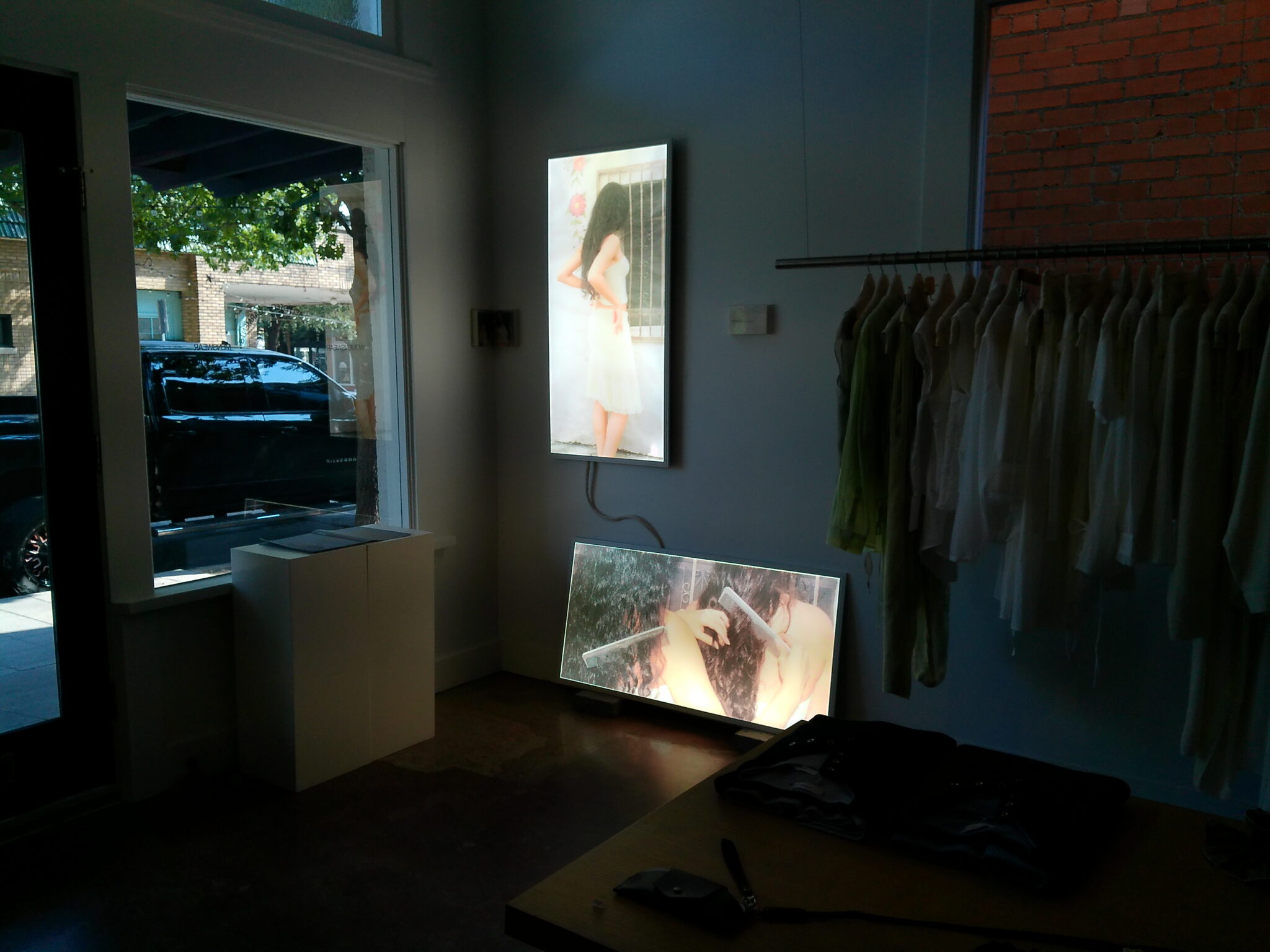
East Dallas born and raised multimedia artist and photographer Ricardo Rosales currently has his photo installment and zine titled “Plata Fina” is on display at Jowa., a Korean boutique shop in the Bishop Arts District.
Rosales currently works as the shop’s photographer and graphic designer and now lives in Oak Cliff. Having a great relationship with the owner, he said they are always trying to find new ways to bring art and community together by showcasing both local and non-local artists in the shop. With his boss’s encouragement, Rosales finally took the leap to install his own work and said he is grateful to have a job with a leader who supports him both inside and outside of his work.
“Plata Fina” will be on display at 402 W Eighth St. through the end of October.
What is the story behind “Plata Fina?”
The story behind this work explores the intimate and layered relationship I have with hair—specifically, long, thick brown hair. Growing up, I was surrounded by women whose hair often reached down their backs, and one of my earliest core memories is combing my mother’s hair after she showered. I remember the patience and care required for the task, how exhausting it could be for her to keep it from tangling, and the quiet satisfaction I felt in helping.
That simple yet profound act has remained with me, and over time, the gesture of combing, the presence of natural dark hair, and even the object of the comb itself have become recurring subjects in my work. Through image-making, I search for a way to translate that memory into form—an attempt to articulate the layered meanings within this personal fascination.
Why is the piece titled “Plata Fina?” Is that just the zine title or is that the title of the installment as a whole?
“Plata Fina” is the title of the entire installment. It translates to “Fine Silver” in English and is a lyric from the song “Los Peces en El Río.” There’s a part in the song that describes the Virgin Mary combing her golden hair with a comb made of fine silver: “La virgen se está peinando entre cortina y cortina sus cabellos son de oro y el peine, de plata fina.”
That is why the comb in the images is a silver looking color. I wanted to reference this lyric because it connects to my ongoing exploration of the layered meanings I associate with the ritual of hair and combing it. Growing up Catholic, the Virgin Mary was a significant part of my upbringing, which made this concept even more sacred to me. The idea of the Virgin Mary’s comb being made of fine silver represents the importance and sacredness of this ritual and of hair itself; it absolutely deserves a fine sterling silver comb.
What is the importance of hair in this work?
In all of my pieces where I incorporate hair, particularly long, thick, brown hair, it serves to represent and celebrate the Mexican women I grew up with. This imagery is deeply connected to my childhood memories of combing my mother’s hair, symbolizing a profound personal and cultural connection.
What inspired you to put together this collection?
The main inspiration for this collection was the backdrop the models are standing in front of. It’s a photograph I took of a window with a steel window guard and a delicate floral painting draping down the sides, which I captured in San Felipe, a small town in Guanajuato, Mexico. I kept revisiting the image when I returned to the States and wished I could photograph a person in front of it. Since I couldn’t immediately go back to Mexico, I decided to enlarge the image into a backdrop to bring that setting to life here. That’s when I began planning for the models I would photograph. The concept of hair and the act of photographing hair has always been a recurring theme in my work, so I integrated it into this shoot.
Take us through the zine, what does it highlight?
I enjoy making zines; they are a fun and an accessible way to share a small story and demonstrate my interest in layout and editorial design. For this collection, I chose the comb as its symbol, making it the cover of the zine. The second page features the series title and an artist statement. The remaining pages display additional images from the shoot that I felt deserved to be viewed and shown.
There are two photos at the shop on the wall. Why were these two in particular selected?
Given the limited space and my decision to use only one wall in the shop, I needed to condense the photo installation to something that would work well within a retail environment. This installation is a small fragment of how I truly envision showcasing the work. I had to be mindful of the space and maintain a minimal and tasteful aesthetic. Therefore, I selected two images that best summarize the core concept and theme of this series: dark, thick hair and the act of combing hair. These two photos effectively convey that message.
What are you hoping to showcase through this installation?
Through this installation, I hope to showcase my ability to collaborate and to develop my narrative-based work into a versatile body of art. In my opinion, it is my first series that strikes a great balance between narrative work and fashion photography. I also aim to highlight my identity as a multimedia artist, as I enjoy printing my images and exploring different ways to document or bring them to life.
Jowa. is located at 402 W Eighth St.