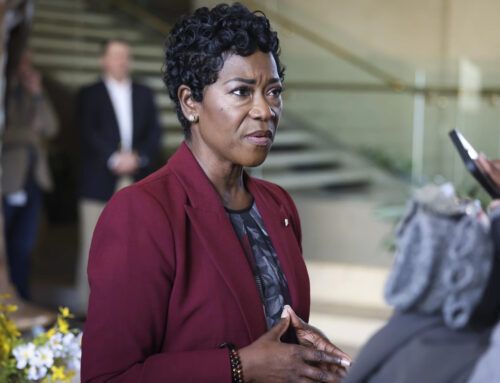
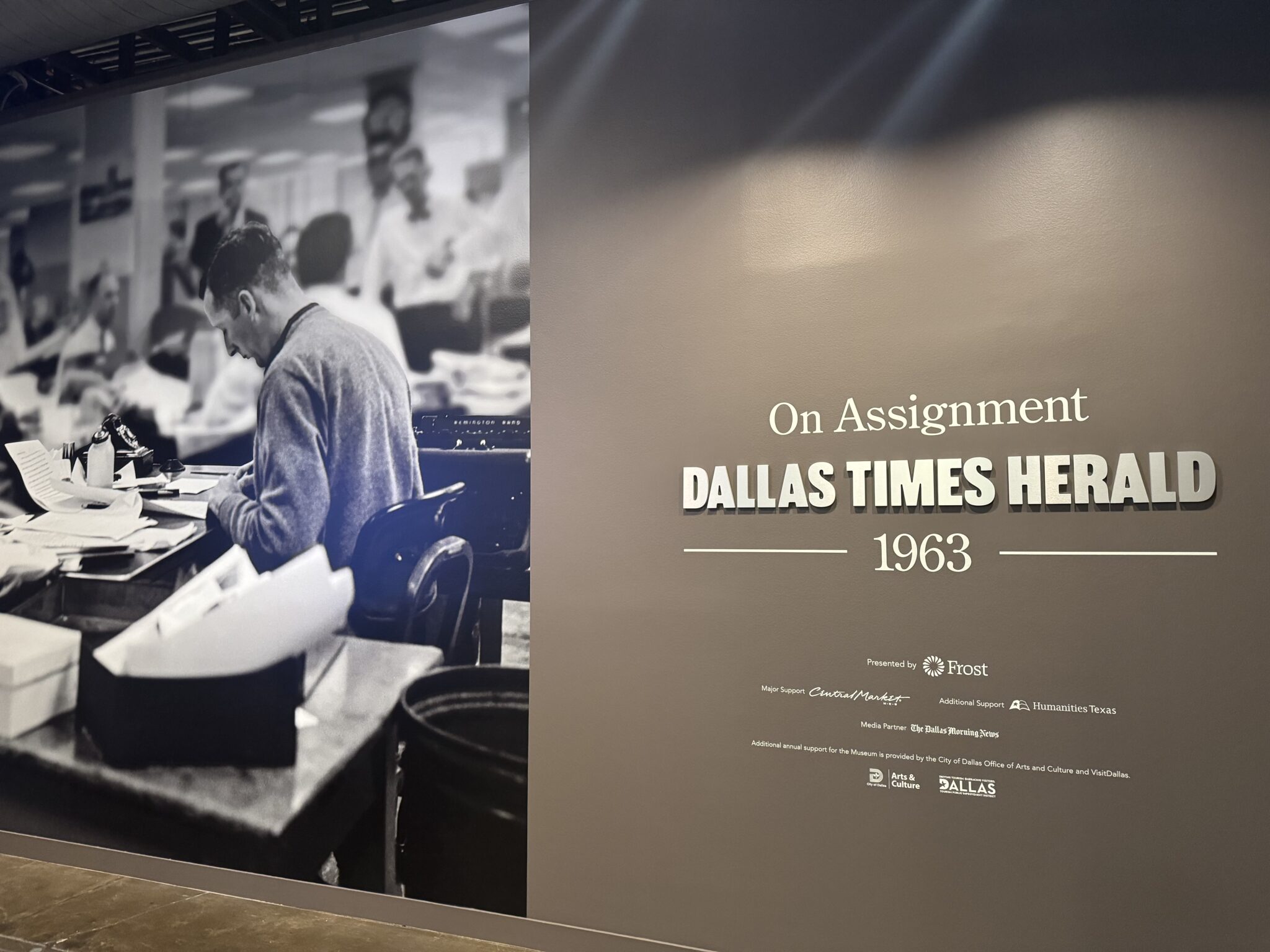
Photo by Victoria Hernandez.
A new exhibit at The Sixth Floor Museum at Dealey Plaza showcases four journalists from the Dallas Times Herald that covered the assassination of President John F. Kennedy.
Titled “On Assignment: Dallas Times Herald 1963,” the exhibit explores the paths of Keith Shelton, Jim Lehrer, Darwin Payne and Vivian Castleberry as their assignments changed from standard coverage of the Kennedy visit to breaking national news.
“Through photographs, reporting, and firsthand accounts, this exhibit explores a pivotal moment in history, and underscores the essential role of journalists in documenting events with accuracy, responsibility, and integrity,” CEO Nicola Longford said. “It is a powerful reminder of how (the) press shapes our understanding of the world around us.”
At the start of the exhibit, visitors can select from four “press pass” pamphlets for a guide to key locations each of the journalists traveled to during that weekend. Locations highlighted in the exhibit include Dallas Love Field, the motorcade, Dallas Police Headquarters, Dealey Plaza, Texas School Book Depository, Dallas Trade Mart and Parkland Memorial Hospital.
“Rather than look at this complicated topic of the Kennedy assassination from a distance, with this exhibit, we really wanted to provide a more intimate narrative that allows us to walk with the men and women who lived the experience of the Kennedy assassination,” head of curatorial Stephen Fagin said. “Their stories hold two truths at once. They were professionals doing their job, but they were also human beings. Standing inside a tragedy that was playing out around them in real time.”
In addition to the journalists’ accounts, the work of Dallas Times Herald staff photographers Bob Jackson and Eamon Kennedy is featured.
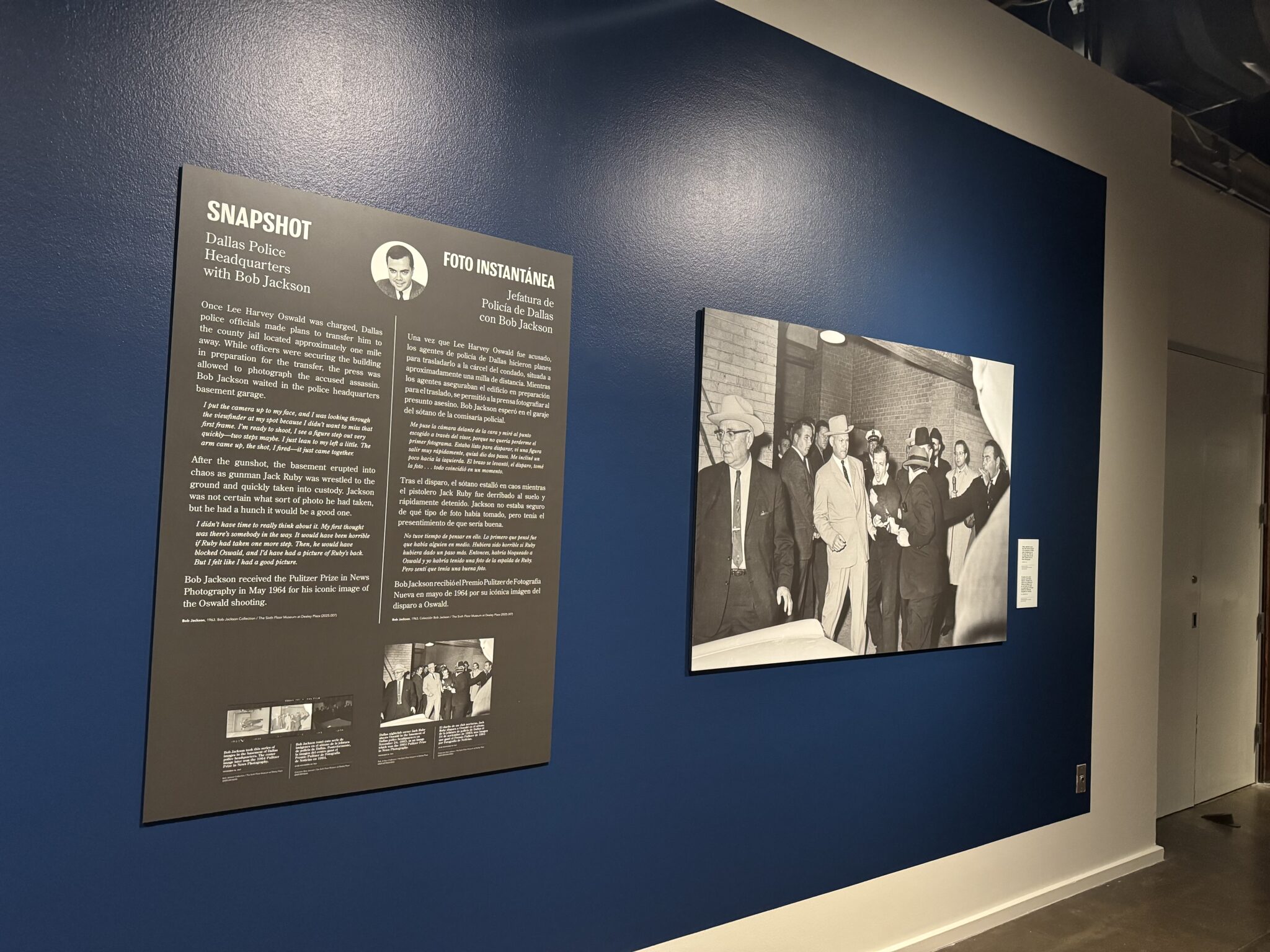
Photo by Victoria Hernandez.
One photo included in the exhibit is the Pulitzer Prize-winning image captured by Jackson as Dallas nightclub owner Jack Ruby shot Lee Harvey Oswald in the basement of the Dallas police headquarters on Nov. 24, 1963. At that time, both Ruby and Oswald were Oak Cliff residents.
At the center of the exhibit is the newsroom, which includes interactive elements.
“You can open file drawers and peruse some of the tear sheets and photographs from that weekend. You can try your hand at photo cropping for newspaper layout. You can hear one of our reporters, Darwin Payne, on this telephone,” Fagan said. “Or if you’d like to report from the field, there is a pay phone between the Trade Mart and Parkland that connects directly to the rewrite desk, where you can convey the breaking news of the story.”
From the newsroom, visitors can move to explore the aftermath and take time to reflect on the historical moment through a compilation of the museum’s news footage, images and reproduced newspapers.
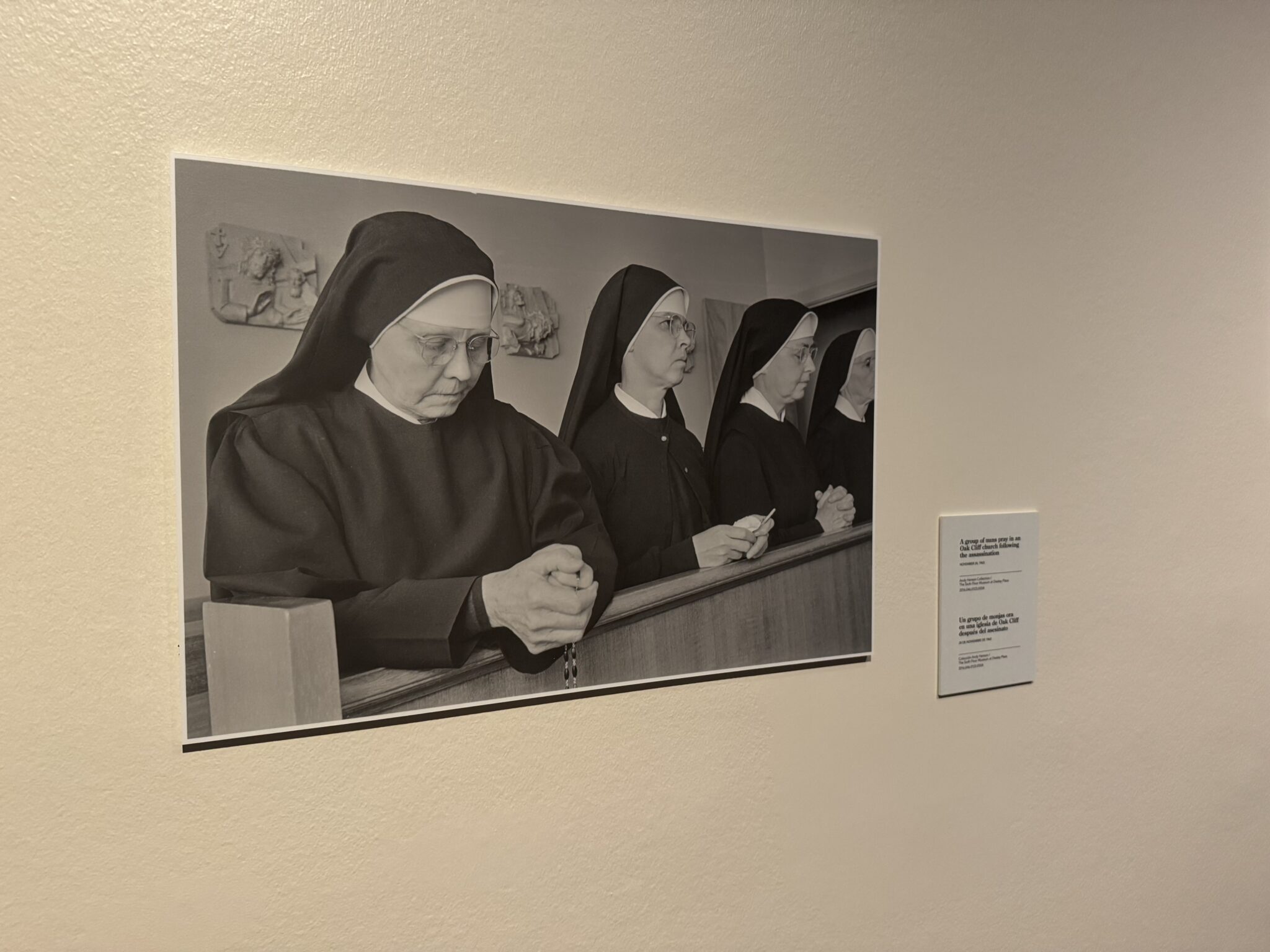
A photo from the Andy Hanson Collection of nuns in an Oak Cliff church. Photo by Victoria Hernandez.
One photo is included from Oak Cliff in the aftermath section, where four nuns are seen holding rosaries and praying. The photo was taken by Andy Hanson on Nov. 24, 1963, however, it is unknown which exact church is pictured.
Finally, the conclusion of the exhibit encapsulates the legacy of the Dallas Times Herald, the reporters and the photographers who lived through the experience.
Tickets to the special exhibit are included with museum admission.
Additionally, the museum will host a conversation with Darwin Payne, one of the reporters highlighted in the exhibit on Saturday, May 2, from 10-11 a.m. Payne had traveled to Oswald’s rooming house in Oak Cliff, where he interviewed the property owner and residents on Nov. 22, 1963. Tickets for the program are available for $15 and do not include museum admission.